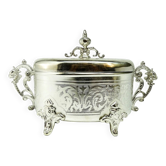
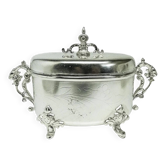
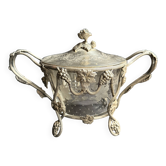
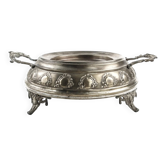
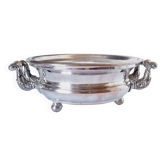
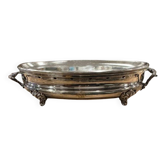
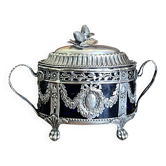
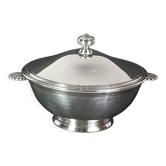
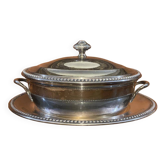
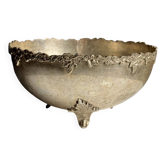
Eclectic fruit bowl, silver-plated brass, WMF, Germany, 19th century

- Dimensions :
- H6 x W13 x D9
- Color :
- silver (Color)
- Material :
- walnut
- Style :
- art nouveau
An eclectic fruit bowl from the 19th century, made in the German WMF manufactory, is an example of craftsmanship from the historicism era with clear references to the emerging Art Nouveau. Made of brass covered with silver plating, it has a cool, matte, silvery-grey shade with a subtle patina and slight discolorations resulting from oxidation. The surface is decorated with embossing imitating reptile skin, giving the object an exotic, almost animalistic character. The bowl is supported on three stylized legs in the form of shells, and the two side handles take sculptural forms of animal heads or figures referring to mythological tradition. The upper rim is enriched with a massive glass insert set in a metal base, whose edge is decorated with a band of rhythmically cut glass 'beads'. The whole combines organic and ornamental motifs, maintaining harmonious proportions and structural solidity. The item bears delicate signs of use: minor scratches, surface discolorations, slight patina – but remains in good condition, without visible cracks or damage. The forms evoked by this bowl tell the story of 19th-century eclecticism – a time when craftsmen and designers sought inspiration in fauna, myths, and exotic textures. The reptile skin pattern and stylized handles allow one to see the world through the prism of the era's romantic imagination and fascination with nature. The golden interior of the glass reflects light with an elegant tone, creating a subtle theatrical effect, while the cool patina of the silver-plated brass retains noble traces of past decades – as if the bowl witnessed numerous salon meetings and home celebrations. The bowl can find its place on a low console in the living room or as a central accent on a dining table, where the contrast of glass and metal will be properly highlighted against a smooth fabric napkin or a walnut wood tabletop. It is worth combining it with other eclectic vessels or glassware from the Art Nouveau era to emphasize the dialogue of organic lines and textures. It will also work perfectly in a collector's display case, among objects drawing from old styles – from classicism to Art Nouveau – or as a single decorative accent in a minimalist interior, where its ornamental details will become a subtle reminder of 19th-century craftsmanship tradition.