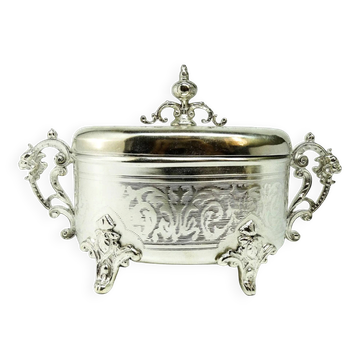
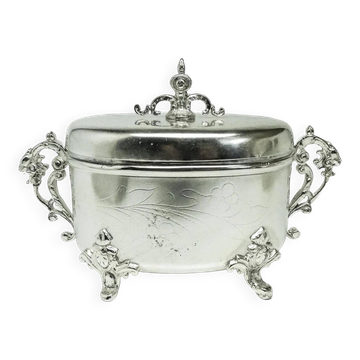
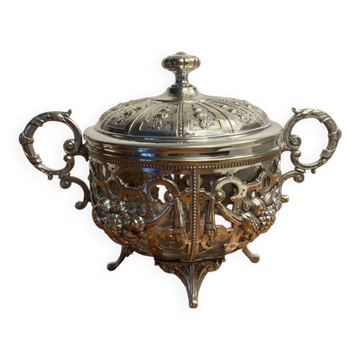
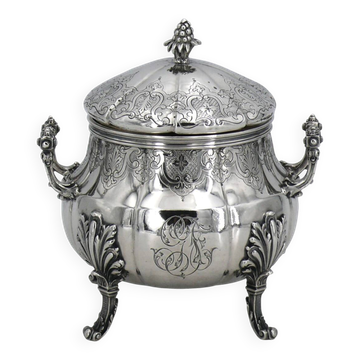
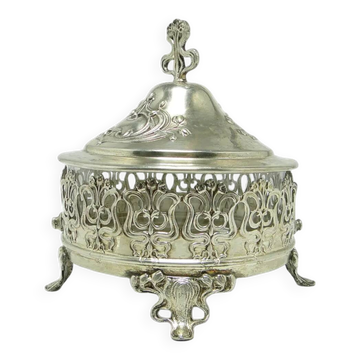
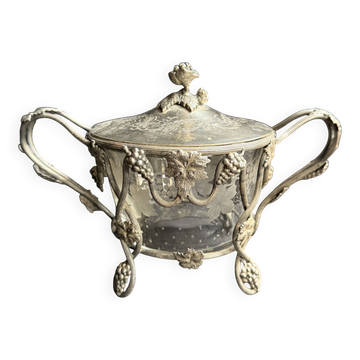
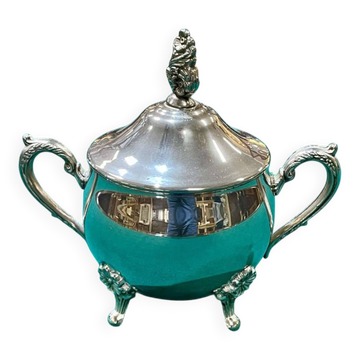
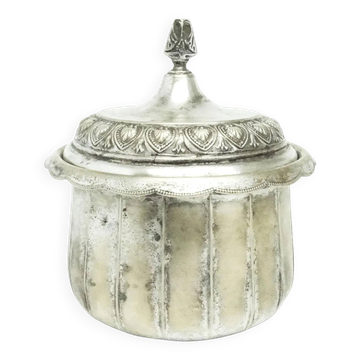
Rococo sugar bowl, silver-plated brass, Poland, early 20th century

A Rococo-style sugar bowl made of silver-plated brass, originating from Poland in the early 20th century. The main colour is a warm, muted gold with a matte finish, enriched by natural patina and local darkening. The entire piece is adorned with rich, asymmetrical Rococo ornaments: plant motifs, volutes, and raised patterns that create a decorative relief on the surface. The lid is topped with a handle in the form of a stylised flower or fruit, and the sugar bowl stands on four curved, ornate legs with refined details. Two side handles are harmoniously shaped and subtly decorated. The high quality of workmanship is visible in the precise castings and proportions. The condition is described as used – there are visible signs of use, abrasions, small dents, and local losses of silver plating, revealing the brass underneath. There are no signs of modern restoration – the authentic, historical appearance is preserved. The form of this sugar bowl tells the story of an era where ornament met everyday life. Its soft lines and wealth of detail evoke the atmosphere of Polish homes from over a hundred years ago, where the silver-plated surface reflected the warm light of candles and tea gatherings. The patina and traces of time are not only evidence of use but also a subtle narrative about the passage of time – the sugar bowl seems to whisper about old conversations and gestures of hospitality that filled its interior. It can be paired with pastel-toned porcelain, a classic embroidered tablecloth, or crystal vessels to emphasise its decorative character in a Rococo or eclectic interior. It works well as an accent on the table during a traditional tea, but also alongside contemporary accessories – such as minimalist ceramics or glass – creating an interesting dialogue between old and new. It is worth combining it with other metal accessories with a noble finish to bring out its historical aura.
Sweet boxes & sugar bowls: other similar vintage pieces
Discover more similar items- -10%
- -20%