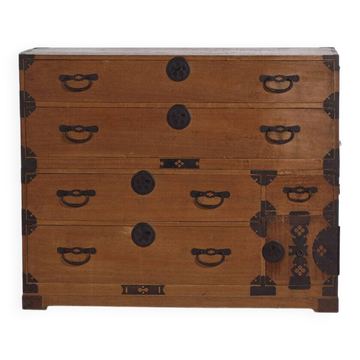
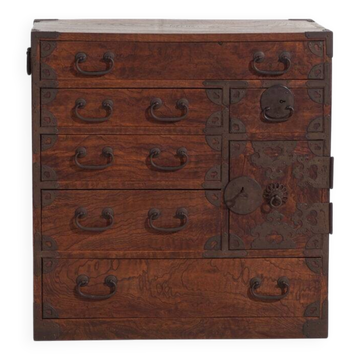
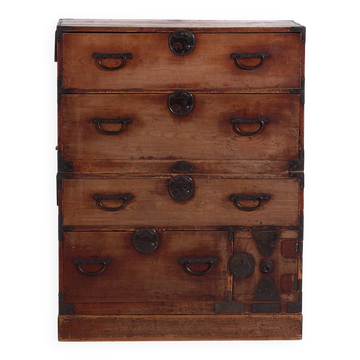
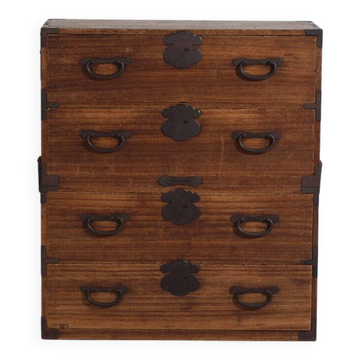
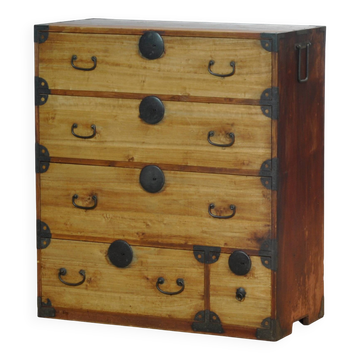
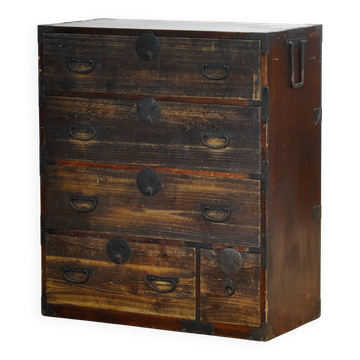
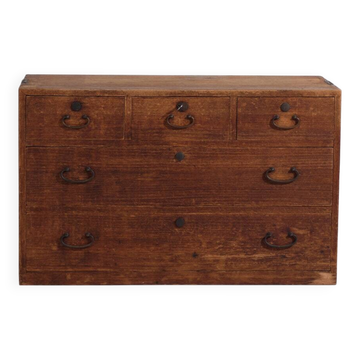
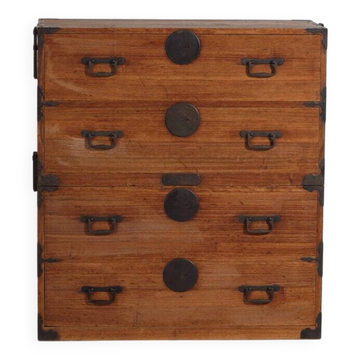
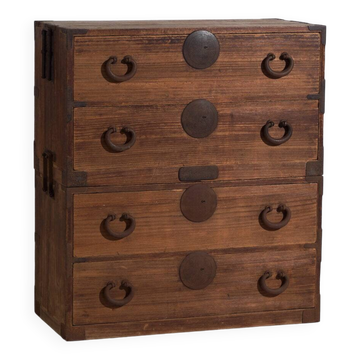
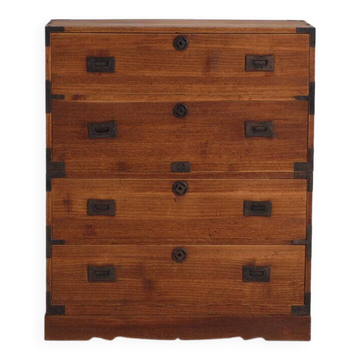
Antique Japanese Tansu chest – Meiji/Taishō period (c.1868-1926) #21
This item has found its owner, but other one-of-a-kind items await you. 👇
Discover similar items- Dimensions :
- H93 x W118 x D44
- Color :
- wooden
- Material :
- wood
- Style :
- world's craft
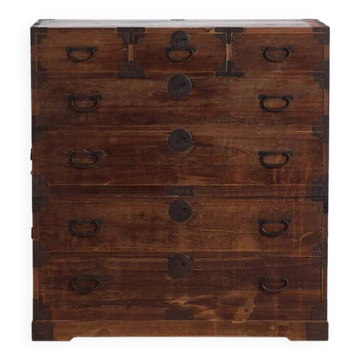
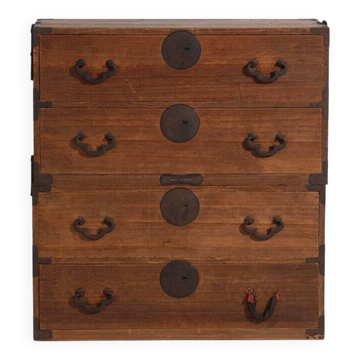
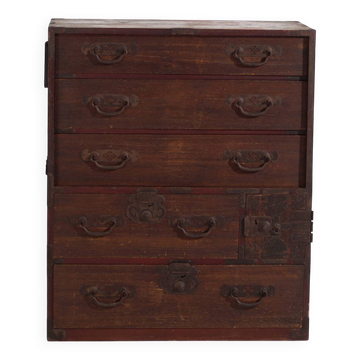
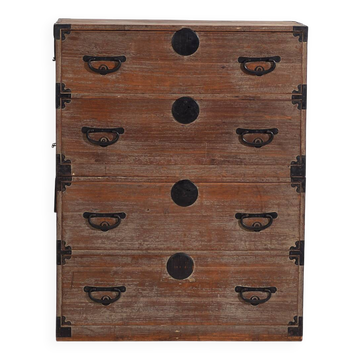
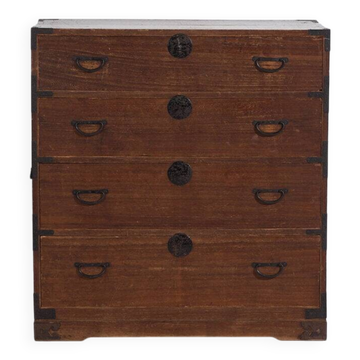
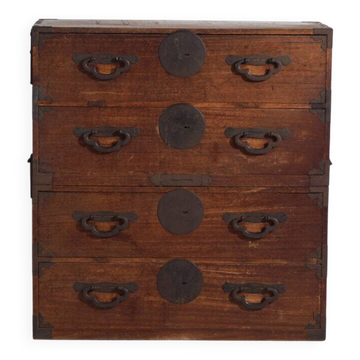
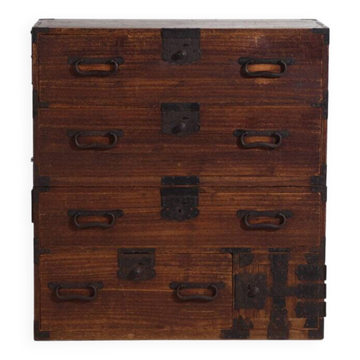
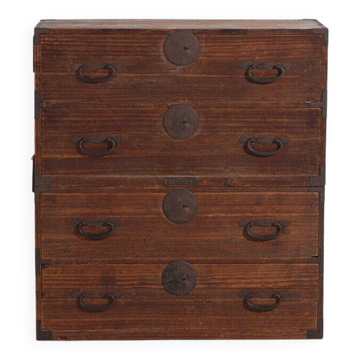
Antique Japanese Tansu Chest with Iron Fittings – Meiji / Taishō Period (c.1868-1926). Dimensions: Length: 118 cm Depth: 44 cm Height: 93 cm. Style: Meiji. Materials and Techniques: Paulownia (Paulownia spp.), Japanese cedar (Cryptomeria japonica) and wrought iron fittings. Place of Origin: Japan. Period: Late Meiji period, early Taishō period. Date of Manufacture: Circa 1868-1926. Condition: Good. Wear is consistent with age and use. Original Japanese tansu chest, made at the end of the Meiji period – beginning of the Taishō period, a transitional phase in Japan during which traditional craftsmanship coexists with new technical and aesthetic influences. The piece is made from paulownia (Paulownia spp.) and Japanese cedar (Cryptomeria japonica), two woods widely used in the making of tansu for their lightness, stability, and resistance to moisture. The structure is reinforced with abundant wrought iron fittings, providing both structural and decorative functions. The composition is particularly asymmetrical and characteristic: wide front drawers are paired with a narrower side module that includes small drawers and a compartment closed by a door. This arrangement catered to specific and functional domestic use, while today it gives the whole a strong sculptural presence and surprisingly contemporary visual balance. The natural patina of the wood, softened by the passage of time, combined with the old iron, gives the piece a material depth that is difficult to replicate in modern furniture. The large circular plates and decorative iron elements enhance its character and authenticity. A versatile piece, ideal as a chest of drawers, low sideboard, or accent furniture, particularly suited to wabi-sabi, Japandi, minimalist, or eclectic interiors, where one seeks objects that carry history and presence.
5 ()
Chests of drawers: other similar vintage pieces
Discover more similar items- -20%
- -20%
- -20%
- -20%
- -20%
- -20%
- -20%
- -20%
- -20%
- -20%
- -20%
- -20%
- -20%
- -10%
- -10%
- -20%
- -20%
- -20%
- -20%
- -29%