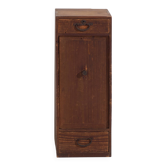
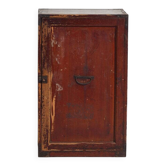
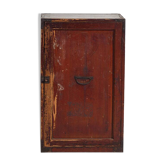
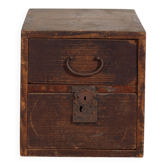
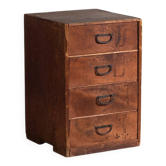
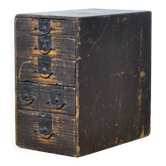
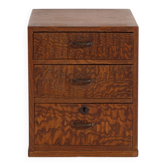
Japanese storage furniture (Tansu) – End of the Meiji period (c. 1890-1910) #17
This item has found its owner, but other one-of-a-kind items await you. 👇
Discover similar items- Dimensions :
- H39 x W27 x D28
- Color :
- brown
- Material :
- wood
- Style :
- world's craft
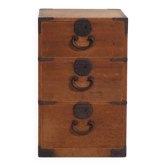
Japanese storage furniture (Tansu) – End of the Meiji period (circa 1890-1910) Dimensions: Length: 27 cm Depth: 28 cm Height: 39 cm. Style: Meiji. Materials and techniques: Sugi (Japanese cedar), wrought iron. Place of origin: Japan. Period: late Meiji. Date of manufacture: Circa 1890-1910. Condition: Good. Wear corresponds to age and use. Original small Japanese storage cabinet dating from the end of the Meiji period, made of solid wood and designed for domestic use. The piece features a front-opening door, internal shelves, and a lower drawer, belonging to a small-format tansu typology. Intended for daily use, this box was meant for the organised storage of small items, documents, or personal effects. Its design is simple and straightforward, without superfluous ornamentation, characteristic of Japanese furniture from the late 19th century, at a time when traditional craftsmanship coexisted with an increasing rationalisation of domestic space. The wood exhibits a deep and particularly sincere patina, marked by visible wear, signs of use, dents, material loss, and chromatic variations typical of a piece that has been intensively used. These marks result from a long process of ageing consistent with its antiquity and original function. In light of its visible characteristics — straight grain, soft texture, structural lightness, and warm darkening — the piece appears to be primarily made of sugi (Japanese cedar), the wood most commonly used for this type of domestic storage during the Meiji period. The choice of a lightweight wood meets both practical and economic criteria, promoting mobility and flexibility of use. UNIQUE PIECE.
5 ()