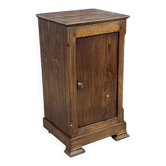
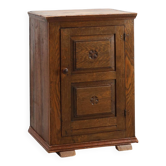
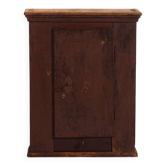
Japanese merchant storage cabinet – Late Meiji / early Taishō period (circa 1890–1926)

- Dimensions :
- H63 x W28 x D35
- Color :
- brown
- Material :
- wood
- Style :
- classic
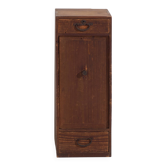
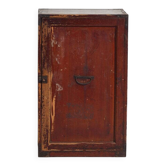
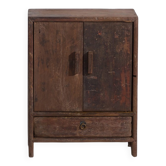
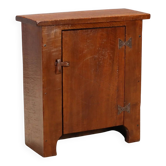
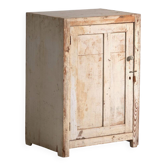
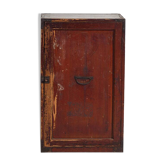
Small antique Japanese cabinet with one door, made of Japanese cedar (Cryptomeria japonica), Japan, dated from the end of the Meiji period to the beginning of the Taishō era, circa 1890-1926. This piece perfectly illustrates the sober and functional logic of Japanese utilitarian furniture from the late 19th century and early 20th century. Narrow and vertical in its proportions, it was designed for the domestic storage of everyday items, documents, textiles, or utensils, while occupying very little floor space. The structure is made of Japanese cedar, a wood highly valued in Japan for its lightness, stability, and natural resistance to moisture. The interior, organised by a central shelf, offers a simple and practical layout, while the front door maintains a austere construction that reinforces the popular and authentic character of the piece. The surface features a deep dark patina, with visible wear on the edges, the top surface, and the perimeter of the door. Far from diminishing its appeal, these marks of time highlight the authenticity of the piece and give it a sculptural presence closely linked to the wabi-sabi aesthetic. The old paper label still visible on the door is also a remarkable detail, adding historical interest and enhancing the impression of an object that has truly lived. The simplicity of the wooden handle and the purity of the lines make this small cabinet particularly appealing in contemporary interiors seeking texture, history, and visual calm. Today, it can be used as a small accent piece, auxiliary storage element, or decorative accent in a bedroom, entryway, office, or carefully composed interior. Details. Dimensions: Length: 28 cm Depth: 35 cm Height: 63 cm. Style: Meiji. Materials and techniques: Japanese cedar (Cryptomeria japonica) Place of origin: Japan.
5 ()