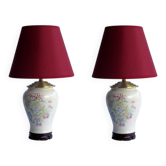
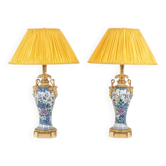
Pair of "Pijnacker" Imari Style Table Lamps from Royal Delft, Hand-Painted with Silk Shades

- Dimensions :
- H44 x W22 x D22
- Color :
- red
- Material :
- ceramics, porcelain and earthenware
- Style :
- classic
Pair of Royal Delft (De Porceleyne Fles) Imari "Pijnacker" table lamps, hand-painted in iron-red, cobalt blue, and gold on a cream ground, converted from a matched pair of 1975 ceramic vases. Finished with new vermilion red dupion silk shades, custom cut brass finishes and fabric wrapped gold cords. Newly wired. International plug customization available at no charge. Height includes lampshade. The Imari or "Pijnacker" style is renowned for its vibrant red, blue, and gold palette, a tribute to the 17th-century Dutch fascination with Japanese Kakiemon and Imari porcelain. This fascination led to the replication of these designs by Delft factories in the early 18th century. Some historians attribute the earliest Delftware in Imari colors to Adriaan Pijnacker, lending the style its colloquial name. Since 1902, De Porceleyne Fles has been celebrated for producing these intricate designs. The production of Imari or "Pijnacker" pieces is a labor-intensive process requiring exceptional skill and artistry. Unlike traditional Delfts Blue models, which utilize blue paint as an underglaze and are fired at high temperatures, the red and gold elements of Imari pieces are applied as an overglaze. This requires a second firing at a lower temperature, enhancing the vibrancy and richness of the colors. The gold paint used is made from pure 24-karat gold, further emphasizing the luxury and exclusivity of these pieces. Due to the high costs associated with this process, De Porceleyne Fles ceased production of Pijnacker style pieces in 2009, making them increasingly rare and desirable. About Royal Delft (De Porceleyne Fles) Founded in 1653, De Porceleyne Fles — known internationally as Royal Delft — is the last of the original Delft potteries still in operation, and the only one in continuous production since the seventeenth century. Since 1879 each hand-painted piece has carried the house's bottle-and-monogram mark with a painter's initials and a letter year code, all.
Bedside and table lamps: other similar vintage pieces
Discover more similar items- -16%
- -20%
- -14%
- -22%
- -12%
- -34%
- -25%
- -13%