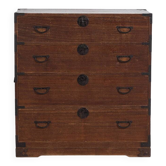
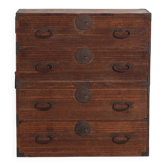
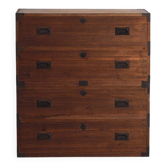
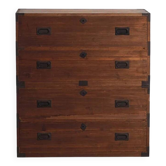
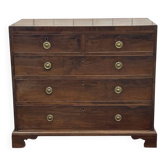
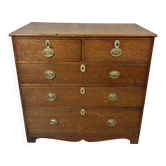
Antique Japanese Tansu chest – Meiji/Taishō period (c.1868-1926) #29

- Dimensions :
- H98 x W92 x D44
- Color :
- brown
- Material :
- wood
- Style :
- world's craft
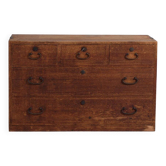
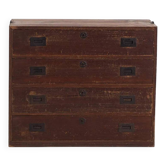
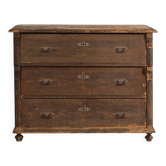
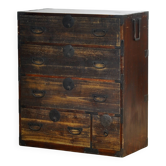
Antique Japanese Tansu Chest – Meiji / Taishō Period (c.1868-1926) Dimensions: Length: 92 cm Depth: 44 cm Height: 98 cm. Style: Meiji. Materials and Techniques: Paulownia (Paulownia spp.), Japanese cedar (Cryptomeria japonica) Place of Origin: Japan. Period: Late Meiji period, early Taishō period. Date of Manufacture: Circa 1868-1926. Condition: Good. Wear is consistent with age and use. This Japanese tansu from the Meiji period is distinguished by its compact and assertive volume, with a marked architectural presence. Its proportions are balanced and measured, designed to meet domestic storage needs while maintaining a sober and functional aesthetic. The piece is made from a combination of paulownia (Paulownia spp.) and Japanese cedar (Cryptomeria japonica). The paulownia, used for the drawers and main structure, provides lightness and stability, while the Japanese cedar is used in secondary elements, offering visual warmth and good performance against humidity variations. The front is structured with four wide drawers featuring original iron handles and circular closing plates. The metal corner reinforcements and side handles recall the original purpose of the piece as a mobile and robust storage element. The exterior surfaces exhibit a deep, matte patina, marked by wear, abrasions, and softened edges, reflecting prolonged use. During the Meiji period (1868–1912), Japanese furniture adapted to new forms of domestic organisation while preserving traditional craftsmanship. Tansu from this period are characterised by their modularity, structural clarity, and a pragmatic approach to storage. The use of paulownia reflects a material culture based on lightness, durability, and adaptability. UNIQUE PIECE.
5 ()