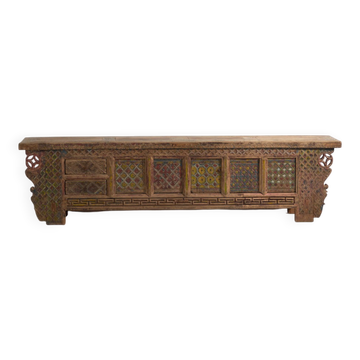
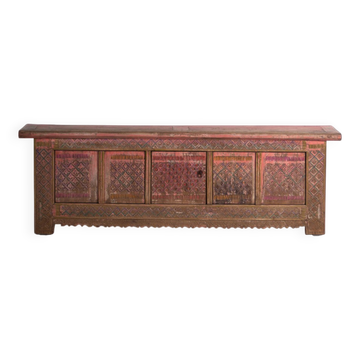
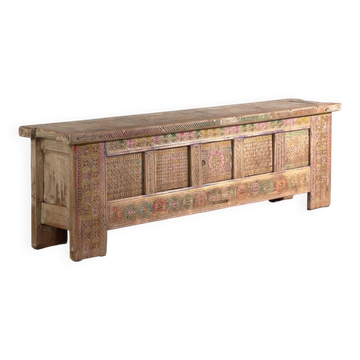
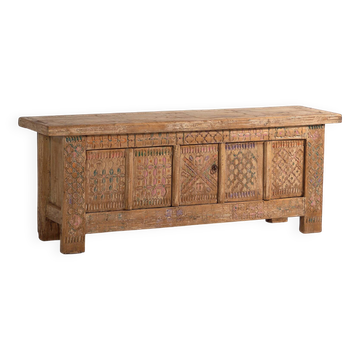
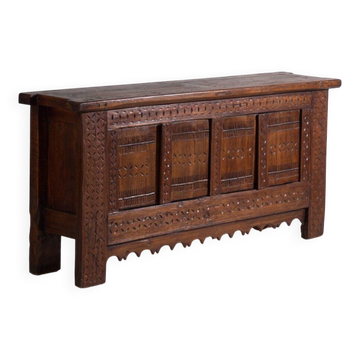
Antique carved polychrome low cabinet in fir – Xinjiang, around 1900

- Dimensions :
- H68 x W204 x D40
- Color :
- multicolour
- Material :
- wood
- Style :
- vintage
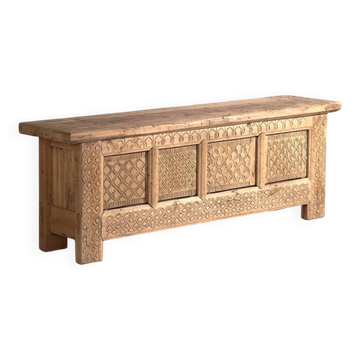
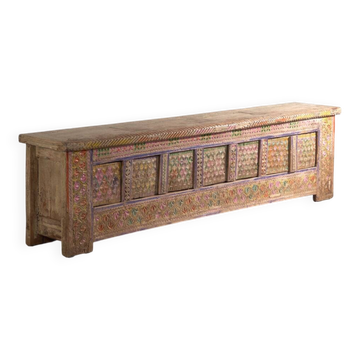
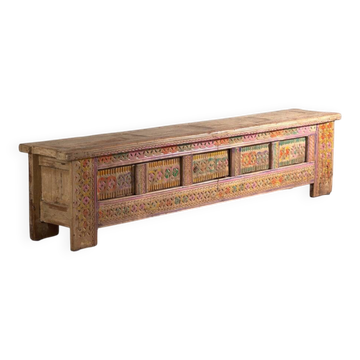
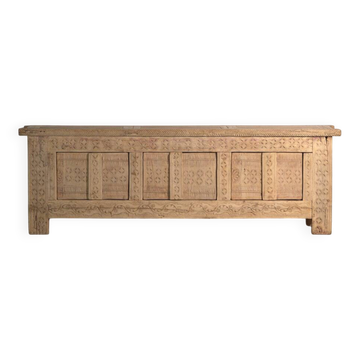
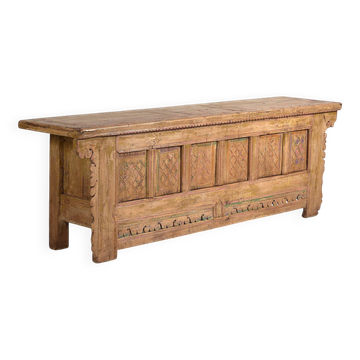
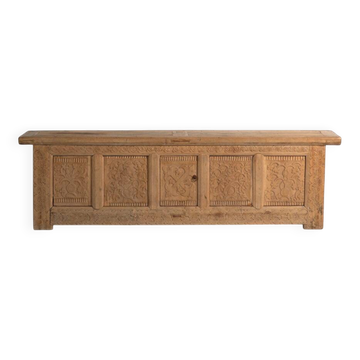
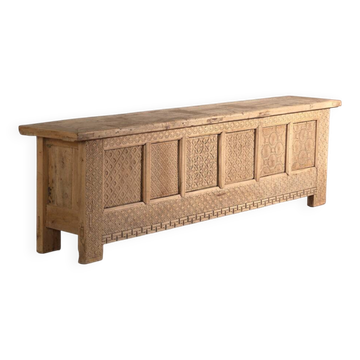
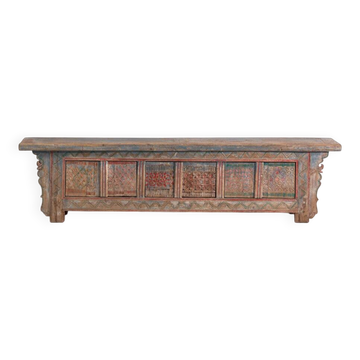
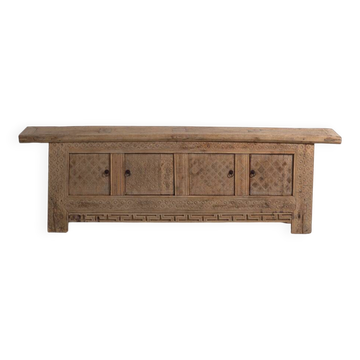
This antique low cabinet, intricately carved and polychrome in fir, is a Uyghur piece from Xinjiang featuring two doors, two drawers, and colourful geometric carvings. It originates from Xinjiang, in the far northwest of China, from the Qing dynasty, where fir was carved and then coloured with pigment. For centuries, Xinjiang was the central section of the Silk Road, and its domestic furniture reflects a distinct tradition from Han practices. The ornamentation is not figurative; it is constructed from latticework, interlacing, and stylised plant motifs, the very vocabulary that orders the tiles and stucco of Kachgar and Khotan. The case is made of solid fir, joined with mortise and tenon joints. Two panel doors occupy the centre, and two drawers align on one side. The handles are forged iron rings on rosettes. The uprights extend into bracket feet, and the back is closed with vertical boards. The carving covers the doors, drawers, uprights, and frieze. The repertoire combines diamond latticework with four-leaf motifs, interlaced lanceolate petals in floral composition, and friezes of vertical fluting. The pigment was applied to the relief in vermilion, emerald green, violet blue, and ochre, with the mouldings highlighted in violet. The colour does not fill; it accentuates the sculpted edge. The pigment has lost some of its body, revealing the wood beneath the carving, especially in areas of wear. The top is bare and shows an open grain and old repairs. The whole piece reads as an honestly worn surface, unrestored. Details. Dimensions: Length 204 cm – Depth 40 cm – Height 68 cm. Style: Uyghur from Xinjiang. Materials and techniques: Fir wood; forged iron fittings; mortise and tenon joinery; relief carving and polychromy with pigment. Place of origin: China, Xinjiang. Period: Qing dynasty. Date of manufacture: Circa 1900. Condition / Observations: Good. Wear consistent with age and use.
5 ()