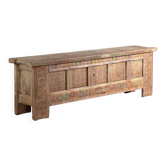
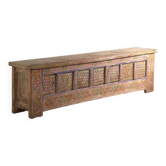
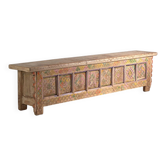
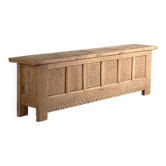
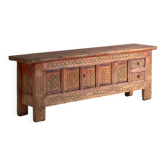
Antique enfilade carved from fir wood – China, circa 1930

- Dimensions :
- H86 x W259 x D45
- Color :
- wooden
- Material :
- linen
- Style :
- classic
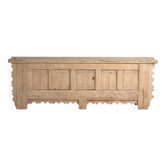
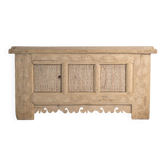
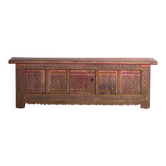
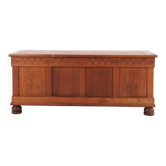
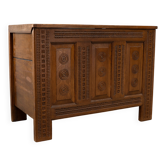
This antique sideboard carved from fir wood features a façade with five carved panels adorned with radiating rosettes and a continuous vegetal frieze at the base. It originates from north-western China, dating from the late Qing dynasty, where fir was worked using a traditional mortise and tenon assembly. The domestic furniture from the Hexi corridor combines continental Chinese techniques with a geometric decorative vocabulary of local origin. Pieces with fixed or hinged tops and carved façades were used to store textiles, winter clothing, and household items. The continuous vegetal frieze at the lower part of the façade is a distinctive feature of pieces from the region. The body is constructed from solid fir. The façade is divided by five square panels in reserve, with radiating rosettes at the centre. A fine frieze runs above, and a wider vegetal frieze with intertwined foliate motifs runs below. The sides display visible corner joints and a smooth panel. The base rests on a continuous plinth. The assembly is traditionally done with mortise and tenon joints, without screws. The carving is gouged into the thickness of the façade. The patina retains the light blonde tone of the fir, with slight darkening in the most exposed areas. The vegetal frieze captures shadow and accentuates rhythm. The piece has remained in continuous use and shows minor marks: small longitudinal cracks, softened edges. Details. Dimensions: Length 259 cm – Depth 45 cm – Height 86 cm. Style: Qing Dynasty. Materials and techniques: Solid fir; traditional Chinese mortise and tenon assembly; flat carving with rosettes and continuous vegetal frieze; aged natural finish. Place of origin: China. Period: Late Qing Dynasty / Early Republic. Date of manufacture: Circa 1930. Condition / Observations: Good. Very well-preserved original carving and natural blonde patina. Wear consistent with age and use.
5 ()