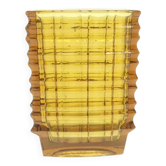
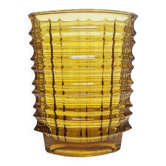
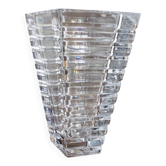
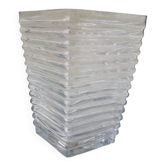
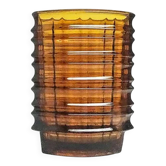
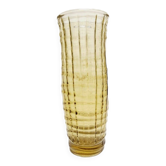
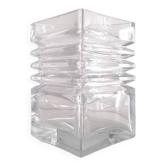
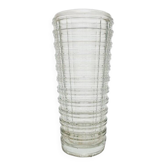
Optical vase, modernism, olive glass, designed by J. Drost, Ząbkowice, Poland, 1970s

- Dimensions :
- H13 x W5 x D9
- Color :
- green
- Material :
- concrete
- Style :
- modernist / bauhaus
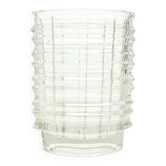
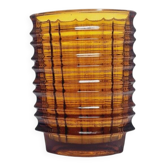
Optical vase designed by Jan Drost for the Ząbkowice Glassworks in the 1970s is an example of Polish pressed glass from the modernist era. The object is made of thick, soda-lime glass in a deep olive yellow shade. The surface of the vase is covered with an embossed, geometric pattern—a regular grid of vertical and horizontal protrusions—creating an optical effect and giving rhythm to the play of light and shadow. The rectangular form with slightly narrowed sides and a massive, stable base emphasizes functionality and solid construction. The glass is shiny, transparent, and noticeably rough on the sides due to the grid texture; between the protrusions, it remains perfectly smooth. No visible damage, discoloration, or repairs; the item is in very good condition, confirming its collector's quality. This vase bears the mark of an era fascinated by light, structure, and repetition—as if the optimistic rhythm of the 1970s, when designers sought modern, dynamic forms for everyday objects, was captured in glass. The geometric texture convinces that even a simple, utilitarian object can bring out unique visual effects. It is a voice of industrial experimentation, yet with artistic ambitions: the play of light on the olive surface 'dances', evoking the atmosphere of interiors designed with modernity in mind, but not devoid of craftsmanship quality. The vase can be paired with a simple, veneered sideboard in mid-century modern style or with colored glass for a contrast of textures and colors. It will look good against light marble, concrete, or wood, where natural light will highlight the rhythmic geometry of its surface. It is worth combining it with subtle accessories—e.g., minimalist sculptures or a single twig—so that the optical pattern does not compete with an excess of other details. It will work both in a collector's composition and as a functional decoration of a modernist interior.
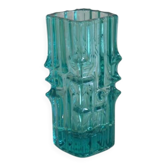
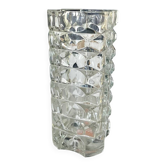
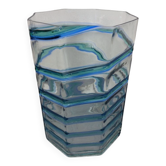
Vases: other similar vintage pieces
Discover more similar items- -15%
- -15%
- -15%
- -15%
- -15%
- -15%
- -25%
- -15%
- -15%
- -13%
- -15%
- -15%