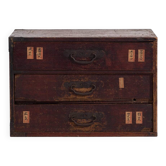
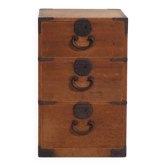
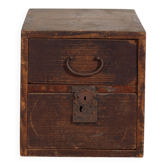
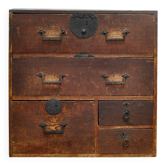
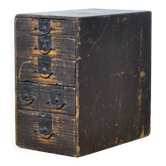
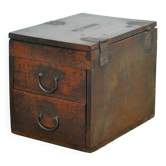
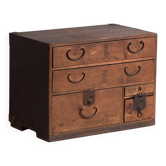
Small ko-dansu chest of drawers in paulownia with kanji labels – Japan, Meiji period

- Dimensions :
- H37 x W34 x D41
- Color :
- brown
- Material :
- wood
- Style :
- world's craft
Small Japanese chest of drawers (ko-dansu) with three drawers made of paulownia wood, originating from Japan and dated to the Meiji period (1868–1912). A piece for a desk or tabletop, halfway between a document cabinet and an auxiliary chest of drawers, representative of Japanese handcrafted furniture from the Meiji era. During the Edo and Meiji periods, the use of small domestic chests — generically called tansu — spread in the homes of merchants, scholars, and affluent families. Smaller models like this one were used to store papers, correspondence, books, or small personal items on a desk or chigaidana. The original sumi ink labels that remain on each drawer, bearing the character 書 (sho, “document” or “book”), confirm this use as a filing cabinet for writings. It is constructed from paulownia (kiri), a wood favoured by tansu tradition for its lightness, stability, and natural ability to regulate humidity — a valuable quality for paper preservation. The drawers are assembled with a rebate and slide on wooden runners without internal metal fittings. The front retains its original wrought iron fittings: stirrup handles (warabite-gata) and lock plates with small decorative escutcheons, typical of the tansu repertoire from the second half of the 19th century. Details. Dimensions: Width: 34 cm Depth: 41 cm Height: 37 cm. Style: Japanese tansu, Meiji period. Materials and techniques: Paulownia wood (kiri); traditional Japanese joinery; original wrought iron fittings; calligraphed paper labels in sumi ink. Place of origin: Japan. Period: Meiji period. Date of manufacture: Circa 1868–1912. Condition / Observations: Good. Retains its original fittings and paper labels. Wear consistent with age and use, without invasive restoration.
5 ()
Chests of drawers: other similar vintage pieces
Discover more similar items- Sold out
- -14%
- Sold out
- -14%
- -17%
- -23%