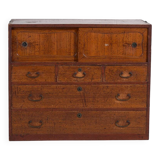
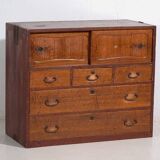


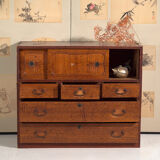


Antique Japanese commode – Taishō / Shōwa period (c. 1920-1970) #10
- Dimensions :
- H76 x W91 x D43
- Color :
- wooden
- Material :
- wood
- Style :
- ethnic
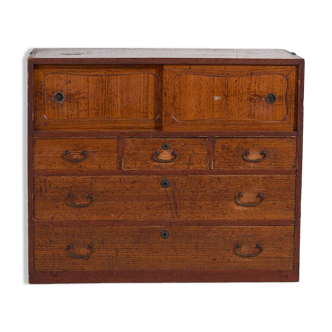
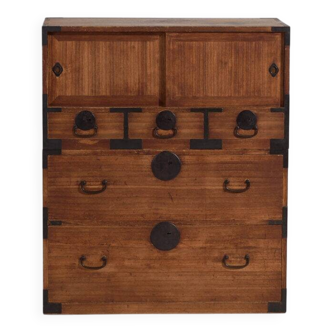
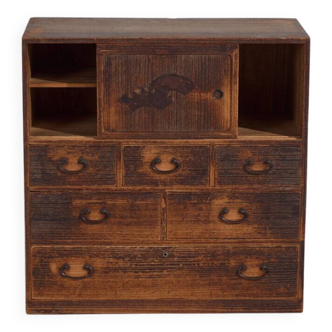
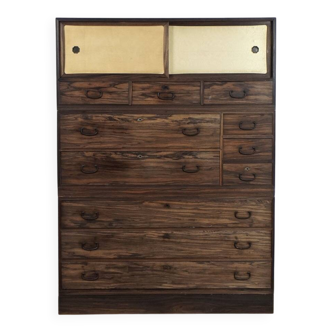
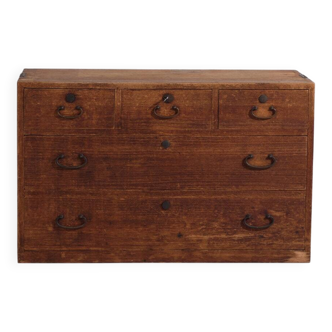
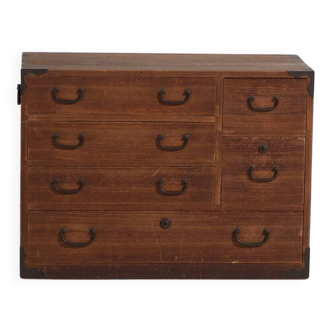
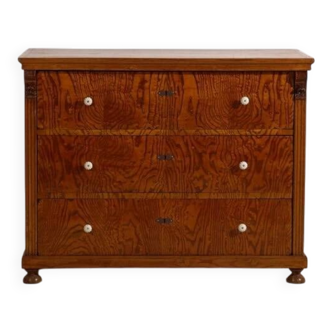
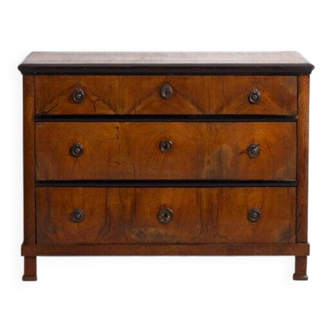
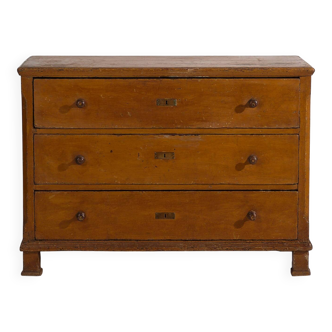
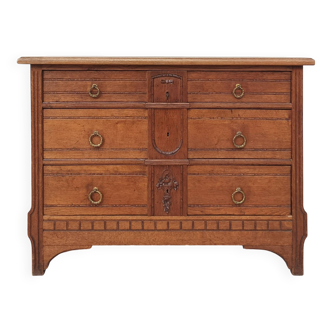
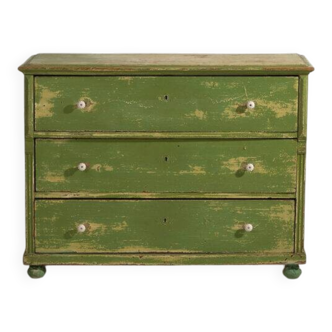
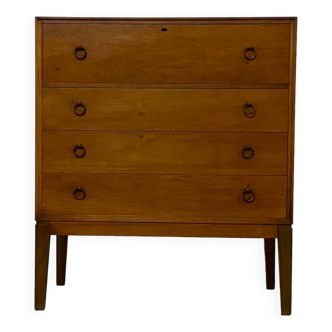
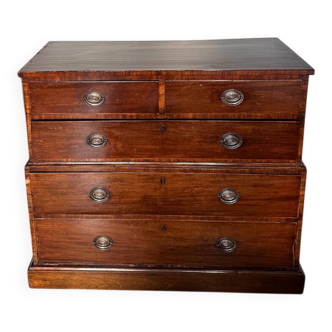
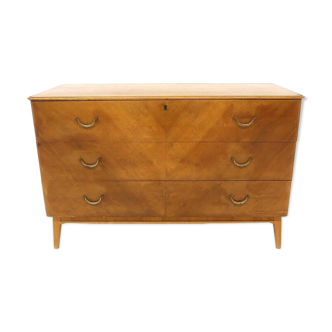
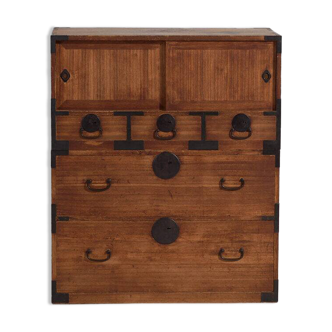
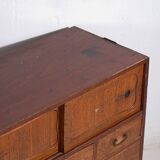
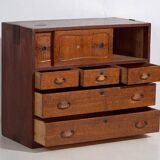
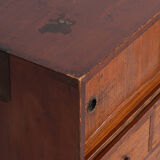
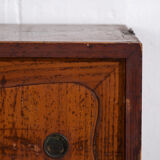
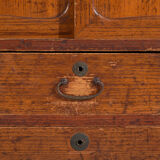
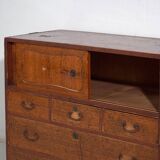
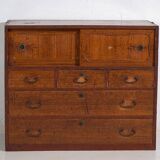
Antique Japanese Commode – Taishō / Shōwa Period (c.1920-1970) Dimensions: Length: 91 cm Depth: 43 cm Height: 76 cm. Style: Taishō Materials and Techniques: Paulownia (Paulownia spp.), Japanese cedar (Cryptomeria japonica) Place of Origin: Japan. Period: Late Taishō period, early Shōwa period. Date of Manufacture: Circa 1920-1970. Condition: Good. Wear corresponds to age and use. This Japanese tansu from the Taishō period is characterised by a low and horizontal format, with a balanced composition combining drawers of various sizes and upper compartments, offering a clear and structured reading of the whole. Its design responds to a precise domestic logic, intended for the storage of textiles, personal items, and everyday elements. The piece is made from a combination of paulownia (Paulownia spp.) and Japanese cedar (Cryptomeria japonica). The lightweight and stable paulownia is primarily used for the drawer bodies, while the Japanese cedar is used in the structure and secondary elements, ensuring strength and good resistance to moisture. This combination is typical of Japanese furniture from the early 20th century. The façade is rhythmically arranged with a succession of drawers featuring original wrought iron handles and discreet circular closing plates. The hardware, simple and functional, creates a graphic contrast with the warm hue of the wood. The surface retains a deep and even patina, marked by signs of use, abrasions, and softened edges, reflecting a natural and coherent aging process. During the Taishō period (1912–1926), Japanese furniture evolved towards more contained and rational forms while maintaining traditional craftsmanship techniques. The tansu of this era express a subtle balance between tradition and emerging modernity, where proportion and function become central. UNIQUE PIECE.
5 ()