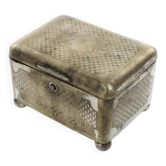
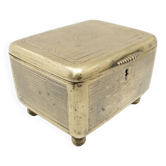
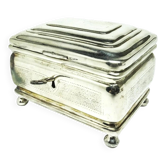
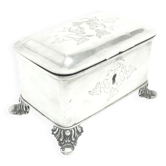
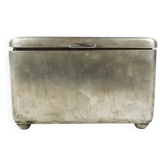
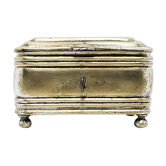
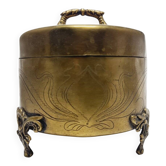
Sugar bowl, Art Deco, silver-plated brass, Poland, 1930s

- Dimensions :
- H9 x W8 x D11
- Color :
- golden
- Material :
- linen
- Style :
- art deco
A sugar bowl from the 1930s, attributed to the Warsaw manufactory Bracia Henneberg, made of silver-plated brass. Its form fits the Art Deco canon: a rectangular body with softly rounded edges stands on four spherical feet, enhancing the sense of geometric order. The flat lid with subtly rounded sides is topped with a small, round handle. The smooth surface is enriched by a delicate, engraved plant motif on the front, which remains a discreet accent. The colour is a muted, warm shade of gold with a matte finish and natural patina, as well as traces of oxidation typical of old brass. Structural elements, such as visible joints at the lid and base, emphasise the solidity of the craftsmanship. The condition is described as good – there are minor scratches, discolourations, and patina, but no major damage or signs of repair. This sugar bowl echoes the voice of Polish Art Deco: discipline of form broken by the softness of detail and the nobility of the material. Rounded edges and a geometric base evoke modernist Warsaw of the 1930s, where functionality and decoration met on neutral ground. The sugar bowl seems to whisper of morning tea among gleaming trays and porcelain, of times when the daily ritual of serving sugar was an opportunity to subtly highlight the hosts' taste. The natural patina and traces of time give it a calm dignity, as if it preserves the memories of several generations. It can be paired with porcelain cups in geometric patterns or glassware with simple lines to emphasise its modernist pedigree. It works well on a classic wooden tray or a white tablecloth, accompanied by silver-plated cutlery and minimalist period accessories. In a collector's Art Deco arrangement, it is worth combining it with other items from the 1920s and 1930s, creating a coherent story of interwar elegance. It can also be a single accent in an eclectic dining room, where its geometric form and historical patina will contrast with modern furnishings.
Sweet boxes & sugar bowls: other similar vintage pieces
Discover more similar items- -15%
- -15%
- -15%
- -15%
- -15%
- -15%
- -15%
- -15%
- -15%
- -15%
- -15%
- -15%
- -15%
- -15%
- -15%
- -15%
- -15%
- -15%