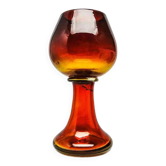
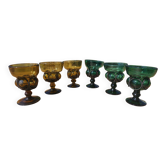
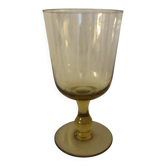
Modernism vase, orange glass, designed by J. Słuczan-Orkusz, Poland, 1970s

- Dimensions :
- H24 x W12 x D12
- Color :
- orange
- Material :
- linen
- Style :
- modernist / bauhaus
A vase designed by Jerzy Słuczan-Orkusz for the Krakow Glass Institute in Krakow is an example of Polish modernism from the 1970s – combining geometric form with decorative accents characteristic of the era. Made of transparent, saturated glass in a warm, slightly amber shade of orange, it attracts attention with its smooth, shiny surface. The cylindrical bowl, supported on a high, gently widening round-profile base, gains dynamism thanks to a pair of hand-shaped volutes at the junction of the cup and the foot. All elements are harmoniously matched, with attention to proportion and detail – the high base accounts for almost half the height of the entire object, enhancing its sculptural character. The glass is uniform, without cuts, matting or decorations, while the colour and craftsmanship are its key features. The condition is described as very good – no losses, chips or traces of restoration, the intensity of the colour and the clarity of the glass have been preserved. This vase tells the story of Polish design from the 1970s, which boldly reached for expressive formal accents and intense colours, seeking new ways of expression on the border of functionality and applied art. The smooth, glossy glass surface reflects light, and the warm colour dances on the surface – as if it brings a fragment of the illuminated interior of the era, in which decorativeness and formal courage became an expression of openness to modernist freshness. The volutes at the cup – made by hand – add an individual tone, reminding us that this is not only a utilitarian object but also the result of a craftsman's work open to experimentation. The vase from the Krakow Glass Institute will work well both in a collector's space and in a modern living room, where it can become a central accent on a low console or as a solo element on a shelf. It is worth combining it with other objects from the era – glass in contrasting colours or simple, steel accessories – emphasizing the modernist context. As a single decoration among plants with geometric leaves or against a light wall, it will highlight its saturated shade. In minimalist interiors, it will bring a distinct note, without dominating the rest of the arrangement.
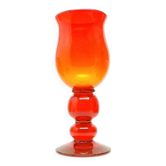
Vases: other similar vintage pieces
Discover more similar items- -15%
- -15%
- -15%
- -15%
- -15%
- -14%
- -33%
- -11%
- -15%
- -10%
- Sold out