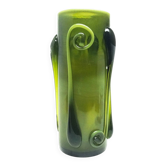
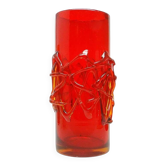
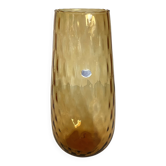
Modernist vase, yellow glass, designed by J. Słuczan-Orkusz, Poland, 1970s

- Dimensions :
- H28 x W13 x D13
- Color :
- yellow
- Material :
- linen
- Style :
- modernist / bauhaus
A vase produced by the Krakow Glass Institute according to the design of Jerzy Słuczan-Orkusz in the 1970s is an example of Polish glass modernism, where the form of a regular cylinder meets ornamental, hand-applied vertical glass ribbons. The surface of the object is made of intensely saturated, transparent yellow glass with a high gloss. The decorative zone takes the form of spiral, organic protrusions running along the sides, created by applying glass from the same batch, ensuring monochromatic colour and a dynamic play of light in the texture relationships. Made in the spirit of modernity, the vase is also an echo of Art Nouveau inspirations, reinterpreted through the filter of the 1970s. The glass is smooth and polished, and there are no visible damages, scratches or wear on the object. It is preserved in very good condition, without signs of restoration — all elements appear authentic, in accordance with the original designer's intention. The yellow glass of this vase seems to catch every ray of light, bringing a revitalising energy typical of the Polish school of glass of the 1970s. In its form, it tells the story of a decade in which colour, structure and light were experimented with, without giving up refined references to the art of the past. The ornamental motifs on the surface refer to the fluidity of Art Nouveau, but their dynamism and rawness are distinctly modernist — it is like a dialogue between nostalgia and the future inscribed in a single form. This vase reminds us that the 1970s in Poland were sometimes a period of creative courage despite material limitations, where glass took on almost sculptural freedom. Słuczan-Orkusz's masterpiece can be placed in a central display: on a walnut or dark oak console, where it will serve as a colour dominant. It is worth combining it with a minimalist background and simple, modernist accessories — a chrome lamp or a graphite mirror — to bring out the pure power of colour and form. It will also work interestingly in a collector's interior, next to other examples of Polish craftsmanship from the 1960s and 1970s, or against the background of natural textures such as linen and raw wood; then it will allow the texture and luminosity of the glass to co-create a multi-layered arrangement.
Vases: other similar vintage pieces
Discover more similar items- -15%
- -15%
- -15%
- -15%
- -12%
- -15%
- -15%