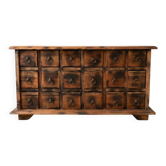
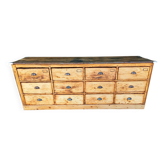
Small Japanese chest of drawers in cedar (ko-dansu), Taishō–Shōwa period, circa 1920–1945.

- Dimensions :
- H21 x W26 x D21
- Color :
- brown
- Material :
- wood
- Style :
- vintage
Small Japanese chest of drawers (ko-dansu) made from Japanese cedar —Cryptomeria japonica—, originating from Japan and dated to the end of the Taishō period and the beginning of the Shōwa period, circa 1920–1945. These small storage pieces were commonly used in homes, shops, or workshops to organise documents, tools, seals, or small everyday items. The piece features a compact structure with five drawers of varying sizes, a typical configuration for sorting various objects. On the side, a small wooden transport handle indicates the practical and mobile use of the furniture. The surface retains traces of its original reddish-brown finish, now softened by use and revealing the grain of the cedar, creating a natural patina highly valued in Japanese utilitarian furniture. The interiors of the drawers show untreated light wood, characteristic of work furniture from this era. Today, these small Japanese chests are often used as office organisers, jewellery boxes, or curiosity cabinets, fitting perfectly into interiors inspired by wabi-sabi, Japandi style, or Japanese minimalism. Details. Dimensions: 26 cm width × 21 cm depth × 21 cm height. Style: Taishō Materials and techniques: Japanese cedar (Cryptomeria japonica) Place of origin: Japan. Period: Late Taishō – early Shōwa. Date of manufacture: circa 1920–1945. Condition: Good. Wear consistent with age and use, with natural patina. This piece is part of the Amaru Antiques collection, Barcelona.
5 ()
Chests of drawers: other similar vintage pieces
Discover more similar items- Sold out
- -7%
- -8%
- Sold out
- Sold out
- -19%