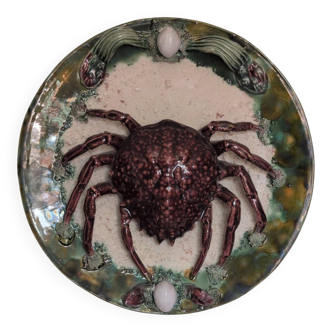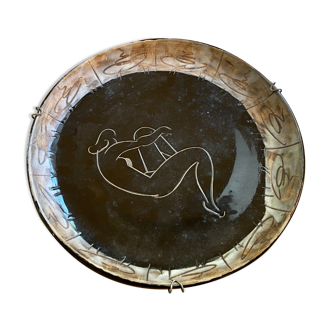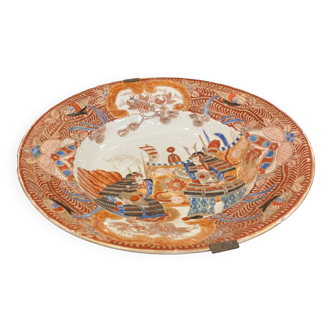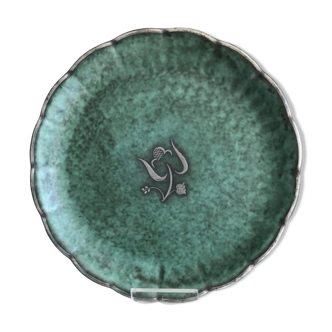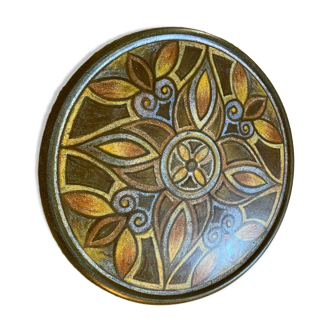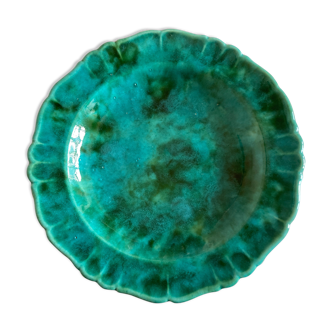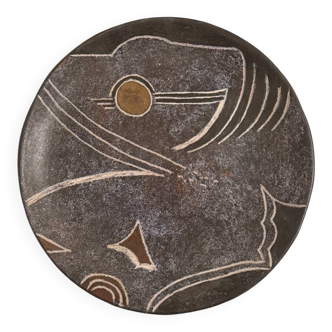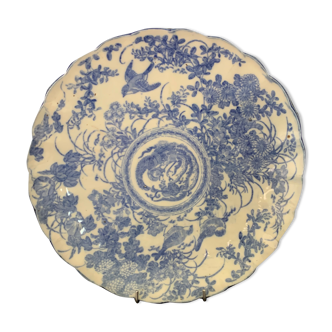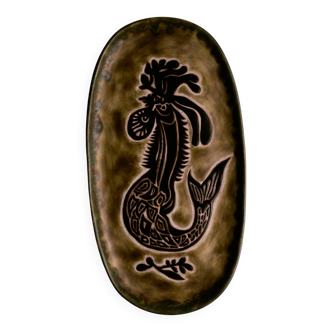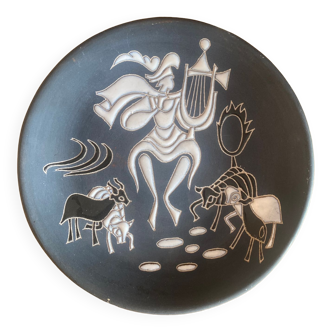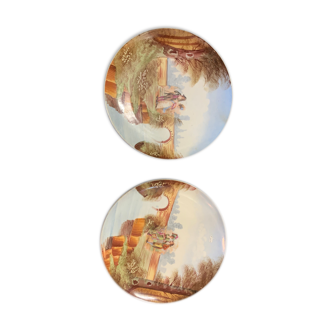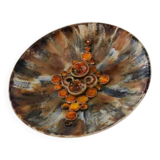
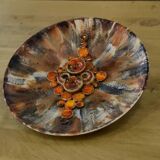

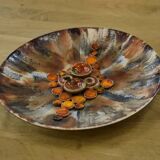

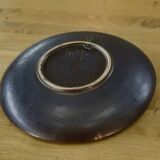
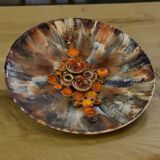
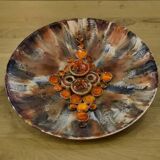


Ruscha ceramic wall plate, 1960s
- Dimensions :
- H6 x W36 x D36
- Color :
- multicolour
- Material :
- ceramics, porcelain and earthenware
- Style :
- vintage
Ruscha ceramic wall plate, 1960s. France. The Ruscha Keramik company was founded in Rheinbach (West Germany), initially under the name Klein & Schardt, before Rudolf Schardt took over in 1948 and renamed the company Ruscha. It operated until 1996, when production ceased or merged into larger structures (notably Scheurich). Ruscha is renowned for its experiments with shapes and glazes, notably the famous "Volkano" glaze, which is one of the thick glosses with a "lava" effect (relief, drips) developed in the 1950s under the technical direction of Otto Gerharz. Among the associated designers, Kurt Tschörner designed many of the forms, and Cilli Wörsdörfer contributed to the decorations in the 1950s and 1960s, notably in series such as Milano and Zebra. Post-war ceramics in West Germany, particularly between 1950 and 1970, are often grouped under the label "West German Art Pottery." Ruscha is one of them. The term Fat Lava is often associated with these ceramics: it refers to thick glazes with a drippy, textured, and raised appearance, seeming to evoke molten lava. This term has become popular among collectors.