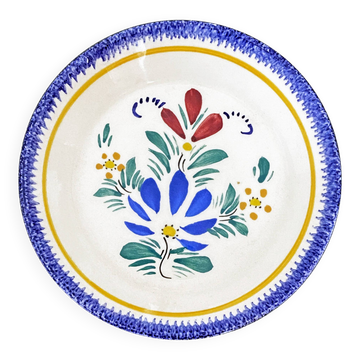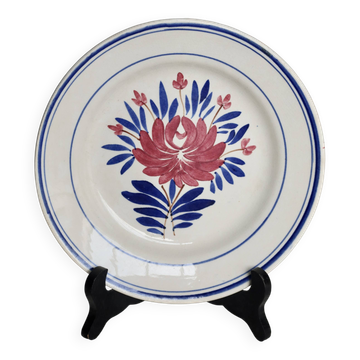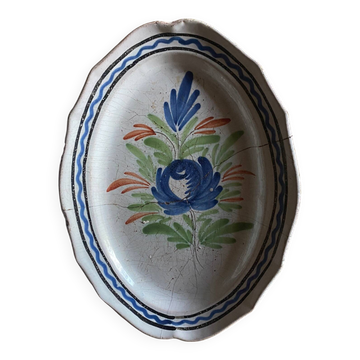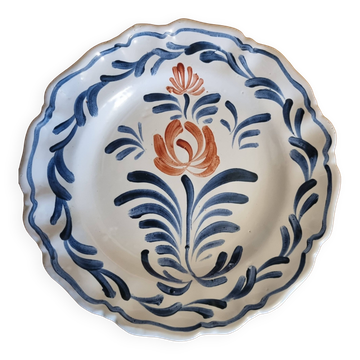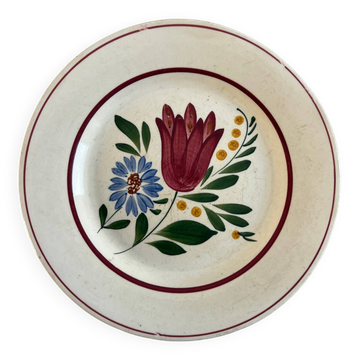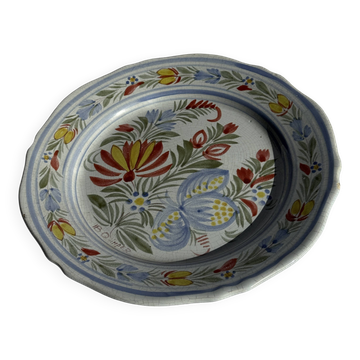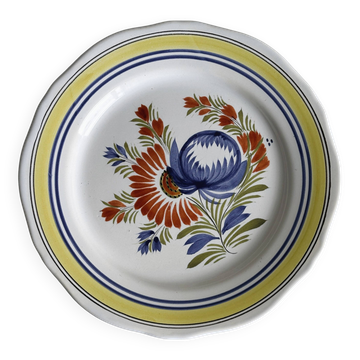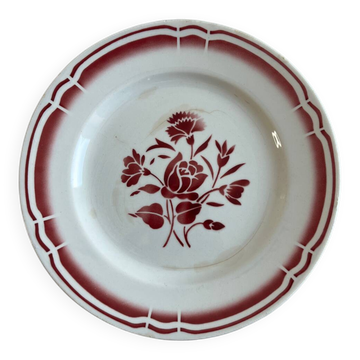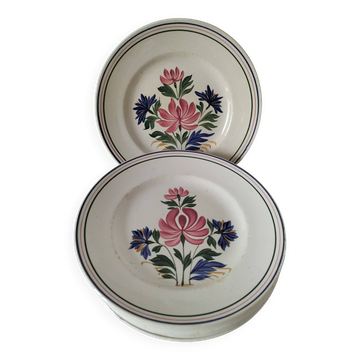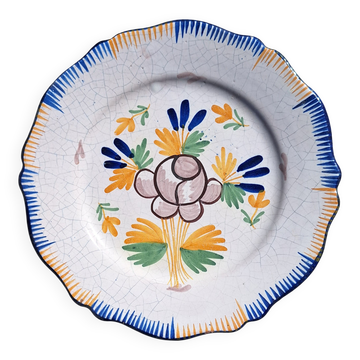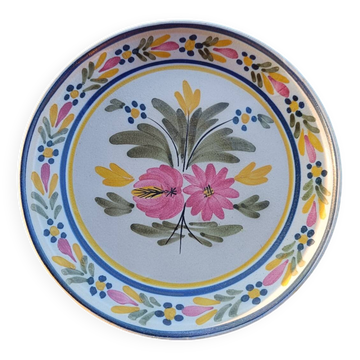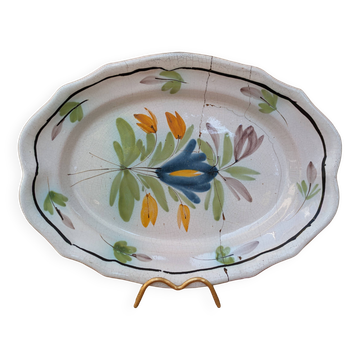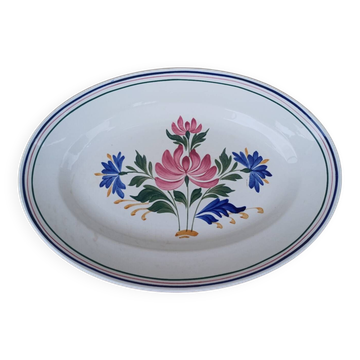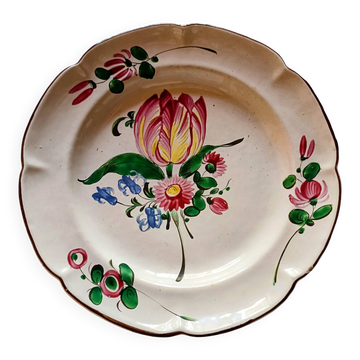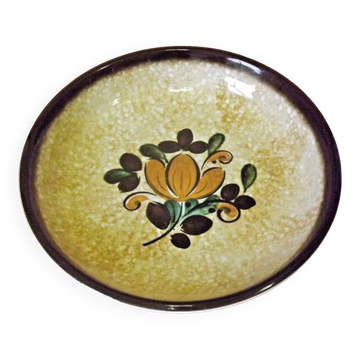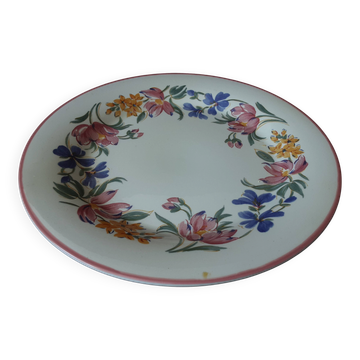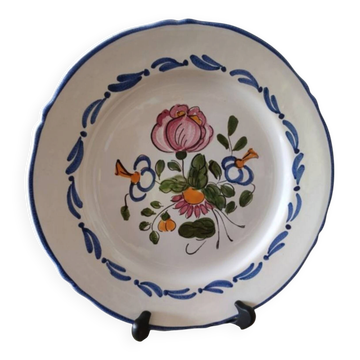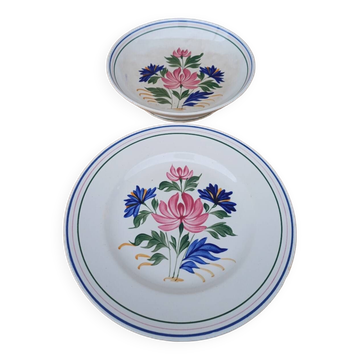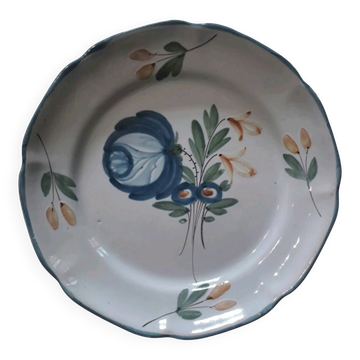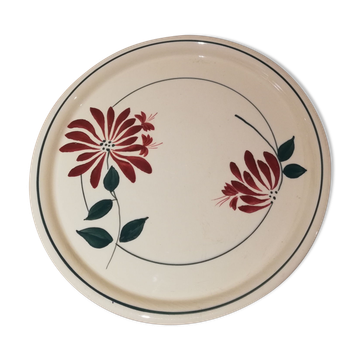
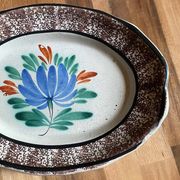
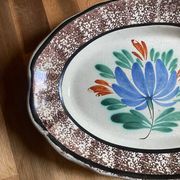
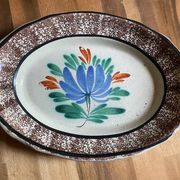
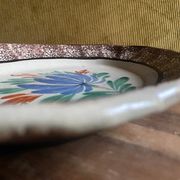
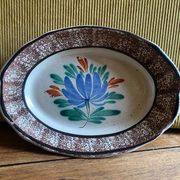
Ceramic plate, antique late 19th - early 20th century, known as "Cul-noir" from Normandy.
- Dimensions :
- H308 x W28 x D20
- Color :
- multicolour
- Material :
- ceramics, porcelain and earthenware
- Style :
- classic
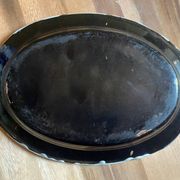
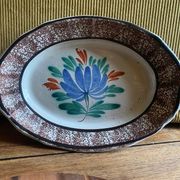
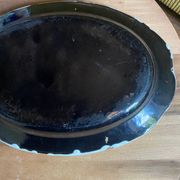
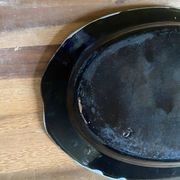
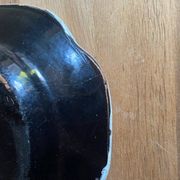
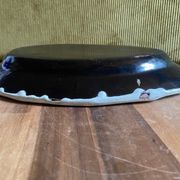
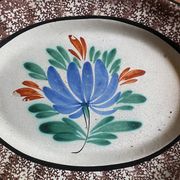
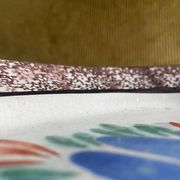
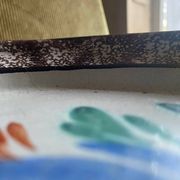
Traditionally, the earthenware dishes known as "cul noir" are characterised by a back covered with a dark brown to black glaze. The front is covered with a white or light blue glaze and decorated with patterns, often floral or inspired by Rouennais designs. This artisanal technique known as "Cul-noir" is characteristic of the earthenware factories of Rouen, the Pays de Caux, Tours, and Malicorne-sur-Sarthe, where this craftsmanship developed as early as the 18th century. This piece is an oval and hollow dish with flared edges, decorated with orange, green, and blue floral motifs in the centre. Note the presence of a hairline crack on the reverse, which is not through, and you may notice it in the photo. Dimensions: Length 28.5cm. Width 20.7cm. Height 3.8cm. This dish was in a house in a nearby village in Lower Normandy, late 19th - early 20th century.