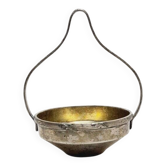
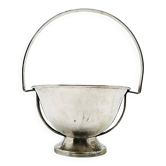
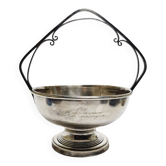
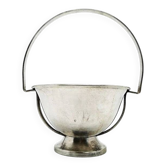
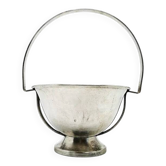
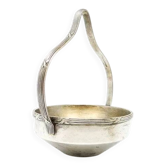
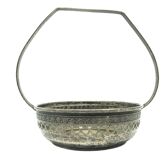
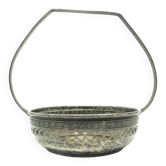
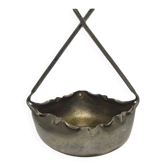
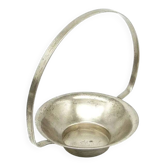
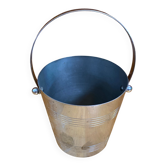
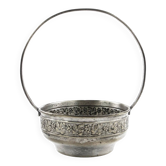
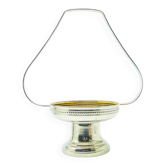
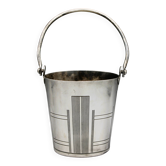
Art Deco sugar bowl, silver-plated brass, Poland, 1930s

- Dimensions :
- H18 x W10 x D14
- Color :
- silver (Color)
- Material :
- silver-plated metal
- Style :
- art deco
A sugar bowl from the 1930s is an example of Polish Art Deco with a distinctly modernist expression, made of silver-plated brass. Its body takes the form of a wide cone resting on a low, round base, emphasizing the futuristic geometry characteristic of the late 1920s and 1930s. The handles are cut in the shape of a regular diamond-shaped frame, integrating function with architectural detail. The matte surface with a silvery, cool shade and local oxidation, subtly textured and devoid of any decorative accents or engravings, focuses attention on the pure line. The construction is uniform, solid, and crafted with a sense of form, while delicate abrasions and patina highlights confirm the vessel's age. The condition is described as good – visible natural patina and minor signs of use, typical for an authentic item nearly a century old. The form of this sugar bowl is like a glimpse into the future as imagined by Art Deco designers, at the intersection of futurism and functional simplicity. The silvery metal reflects light with a gentle matte sheen – almost like the outline of a modernist city seen through a slightly misted window. The lack of ornamentation speaks to the strength of geometry and the belief that applied art should be concise and honest; this sugar bowl seems to whisper the story of pre-war Lviv, full of avant-garde and creative aspirations. It can be paired on the table with geometric glass or a porcelain set from the same period to highlight its architectural features. It also works well as a solo accent on a shelf — against dark wood or a pure white tablecloth, emphasizing the minimalist line of the interior. In collector arrangements, it is worth combining it with other metal vessels from the era or noble glass in the Bauhaus style to bring out the atmosphere of the 1930s and the noble character of the material.