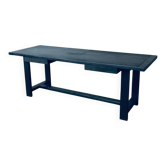
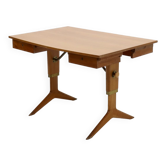
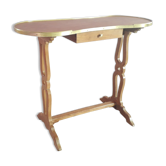
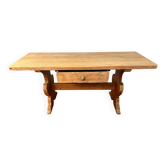
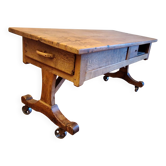
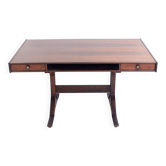
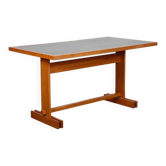
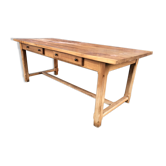
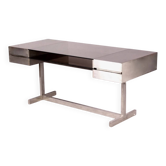
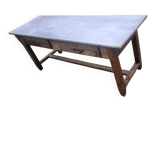
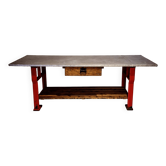
Rare walnut working table/desk by Ignazio Gardella, Milan – Italy, 1950.

- Dimensions :
- H74 x W180 x D90
- Color :
- brown
- Material :
- wood
- Style :
- design
An exceptionally rare and museum-level working table designed by architect Ignazio Gardella in Milan, dating to 1950. This desk stands as a remarkable testament to Gardella’s refined synthesis of architectural rigor, material research and functional innovation, translated into furniture design at the highest level. Executed in solid walnut, the desk is defined by a rigorous yet elegant structural composition. The trestle legs support a sophisticated framework that elevates the tabletop with remarkable lightness. The top is realised in thick plate glass, resting on the wooden structure and allowing full visibility of the internal construction — a deliberate architectural gesture that reveals the desk’s functional intelligence rather than concealing it. One of the most striking elements is the integrated drawer system, conceived as a suspended storage module beneath the glass surface. The drawers slide smoothly on finely engineered brass runners, an advanced technical solution for the period. The brass elements, including the distinctive hexagonal brass structural components visible in the details, demonstrate Gardella’s deep attention to precision engineering and material dialogue. These metal elements are not decorative but structural, reinforcing the desk while contributing to its refined aesthetic language. This desk is documented and published in the volume “ALOI – Esempi di arredamento moderno di tutto il mondo”, Hoepli, 1950, in the section “Tavoli, Tavolini, Carrelli”, page 82. Its appearance in this authoritative publication confirms both its historical relevance and its exceptional rarity. Only a very limited number of examples were produced. The desk remains in very good vintage condition, with a warm patina on the brass components, minor wear to the walnut surfaces, and traces of original paint residue inside the drawers. All authentic marks that speak to the object’s life and originality, without compromising its structure or functionality.