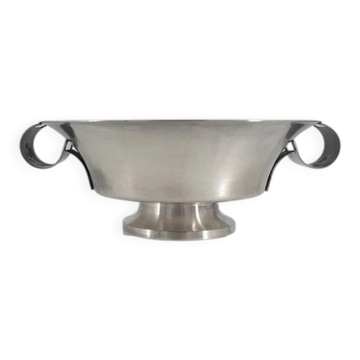
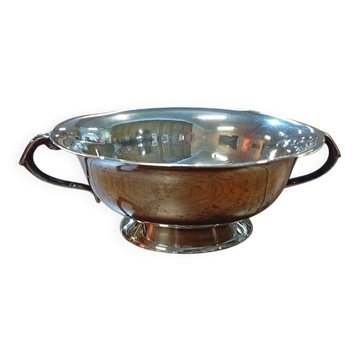
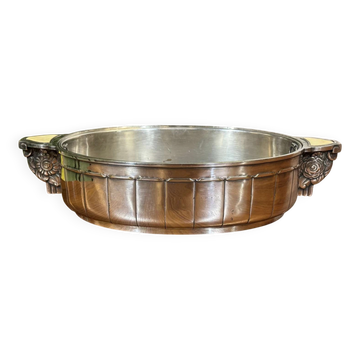
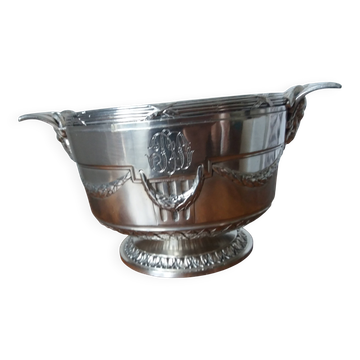
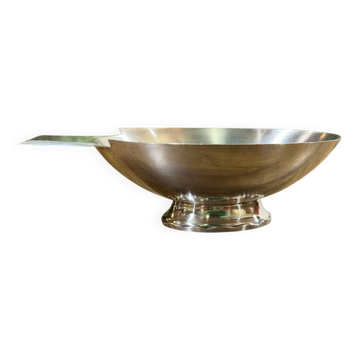
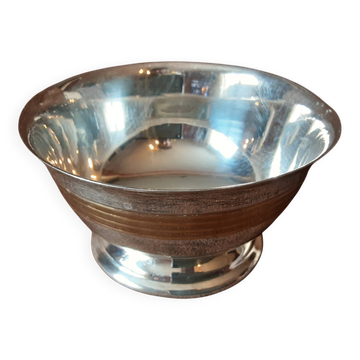
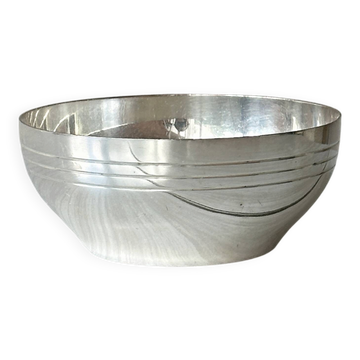
Art Nouveau sugar bowl, silver-plated brass, Germany, early 20th century

- Dimensions :
- H5 x W8 x D14
- Color :
- silver (Color)
- Material :
- brass
- Style :
- art nouveau
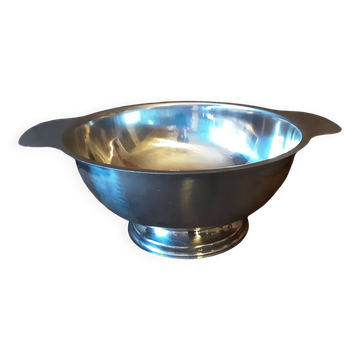
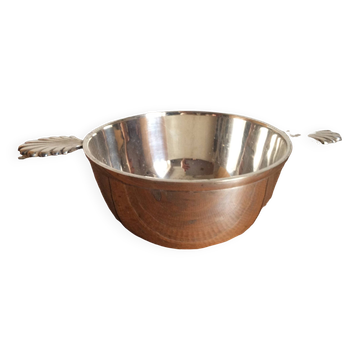
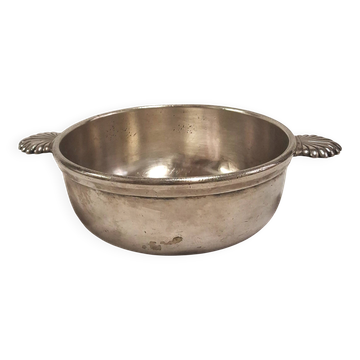
An Art Nouveau sugar bowl made of silver-plated brass, produced in the early 20th century by the German company DBE (Dupper and Bernhold Alpacca Silver Plated). It features an organic, asymmetrical silhouette characteristic of the Art Nouveau style. The cool, patinated silver shade is combined with delicate golden accents highlighting the relief floral and leafy motifs entwined around the body. The handle harmoniously fits into the fluid profile of the bowl, and the subtle matte patina intermingles with the preserved, slightly subdued shine in less used areas. There are visible small abrasions revealing the brass under the silver plating in places, minor scratches, and natural darkening; the whole retains the authenticity of the original period piece. The construction is solid, and the way the handles are mounted reflects the craftsmanship practices of the early 20th century. The lid is missing. Condition: good, with characteristic signs of patina and use, without modern interventions or damage to the decoration. The form of this sugar bowl tells the story of the turn of the century, when Art Nouveau design boldly drew from nature and broke the rigid canons of earlier craftsmanship. The soft lines of the handle and the fluid, asymmetrical bowl evoke images of winding plants from Art Nouveau posters and everyday objects. The reliefs—worn, shiny, and darkened in places—seem to whisper about past gatherings at the table and changing rituals of home hospitality, where candlelight reflected in the matte glow of the silver-plated metal. This item can be paired with porcelain with plant motifs or simple ceramics to emphasize the ornamentation and richness of the sugar bowl's detail. It will work as a decorative accent on a classic console, surrounded by cut glass or an antique service, creating a discreet dialogue between eras. The sugar bowl will fit into arrangements inspired by Art Nouveau, eclectic collector's compositions, or against the background of subdued fabrics and dark wood—where the story of craftsmanship and the history of the object matters.
Sweet boxes & sugar bowls: other similar vintage pieces
Discover more similar items- -24%
- -32%