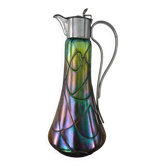
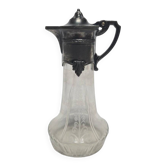
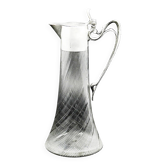
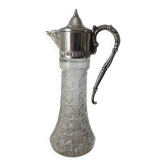
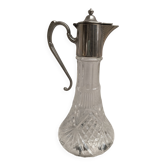
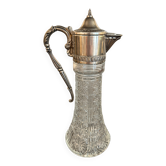
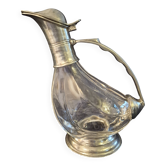
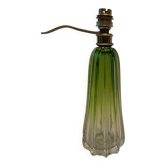
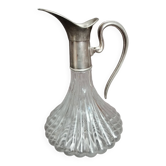
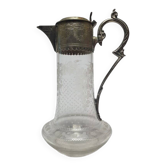
Carafe, Art Nouveau, glass, Czechoslovakia, early 20th century

- Dimensions :
- H19 x W10 x D11
- Color :
- multicolour
- Material :
- glass and crystal
- Style :
- art nouveau
A decorative Art Nouveau carafe from the early 20th century, made in the Czech Kralik (Loetz) glassworks, is an example of advanced glassmaking craftsmanship of the era. The body of coloured glass displays a deep, iridescent ruby shade, smoothly transitioning to golden and olive-green tones at the base. The slender silhouette, gently widening towards the bottom, fits the flowing, organic lines of the Art Nouveau style. Patinated brass or bronze fittings include a conical lid, angular spout, and a decorative handle with a profiled woman's head and wavy edge. The glass surface is smooth and shiny, with a distinct metallic sheen characteristic of Loetz products. The metal elements are solidly set, and the whole piece demonstrates high craftsmanship. Condition is very good: the glass is free from cracks and chips, with only delicate traces of patina and natural ageing on the metal, without major damage. The form of this carafe tells the story of Art Nouveau, an era when craft and art entered everyday life, inspired by nature and the fluidity of light. The smooth colour transitions in the glass evoke the changing dawn and dusk, while the handle with a female profile recalls the symbolism of Jugendstil and the atmosphere of European Belle Époque salons. Metallic reflections on the glass and subtle shading give the object the atmosphere of old gatherings at the table, where every detail mattered and utilitarian objects became carriers of artistic vision. The Loetz carafe can be displayed on a console or sideboard in the living room, alongside other Art Nouveau items—such as a fruit bowl or mirror frame—creating a harmonious, collectible composition. It also works well as a central accent among crystal glasses and silver bar accessories or combined with artistic ceramics and Venetian glass. It is worth pairing it with textiles in subtle olive shades or with dark wood furniture to emphasise the multicoloured and historical character of the object.
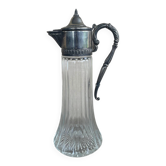
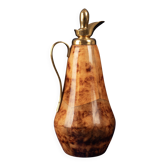
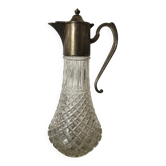
Carafes & pitchers: other similar vintage pieces
Discover more similar items- -12%
- -15%
- -15%
- -30%
- -11%
- -15%
- -25%
- -14%
- -23%
- -37%
- -15%