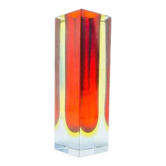
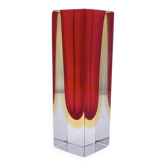
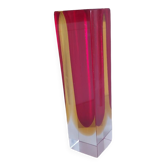
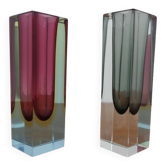
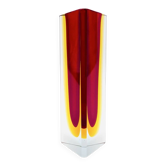
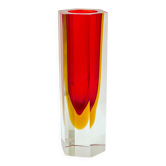
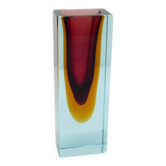
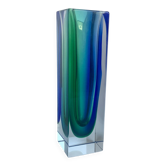
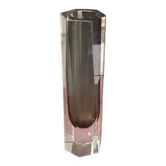
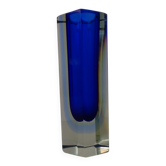
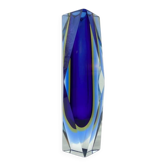
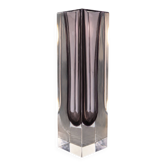
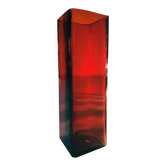
Sommerso mid-century modern vase, glass, designed by F. Poli, Italy, 1950s

- Dimensions :
- H18 x W5 x D5
- Color :
- transparent
- Material :
- oak
- Style :
- mid-century
The Murano Sommerso vase from the 1950s, designed by Flavio Poli, is an example of Italian art glass craftsmanship in the spirit of mid-century modern. The form, with clearly geometric, almost cubic proportions, surprises with its minimalist, architectural character. The central amber-brown core is encased in a thick, clear glass layer, achieving the characteristic Sommerso technique effect – layered depth and noble colour. The surfaces are perfectly smooth and highly glossy; the edges are precisely led, and the subtle colour gradient towards the base in a delicate yellow tone highlights the sophistication of the form. The lack of decoration emphasises the role of material and light in building expression. The vase is in excellent condition, with no signs of wear, chips, or restoration; the glass retains full clarity and shine. The form of this object tells the story of post-war Italy — a time when Murano was reborn with new artistic ideas, combining the experience of Venetian maestros with modernist rigour. The perpendicular walls and layered colour depth give the impression that the vase holds amber southern light inside, enclosed in an icy sheet of glass. The raw elegance and noble material subtly suggest that for Poli, aesthetics were to be built by process, structure, and transparency – not ornament. This is an object that does not play a leading role aggressively but leaves room for light to fully develop its potential. It will work best in an arrangement based on strong material contrasts: it can be combined with matte oak, black steel, or raw concrete to bring out the architectural character of the form. It is perfect for mid-century modern or minimalist collector interiors, where geometric Murano glass, paired with a single branch or left empty, will be a sculptural accent against a low console, marble, or neutral wall. In an art glass collection, the Poli vase can correspond with other objects from the 1950s–70s, creating a subtle dialogue of shades and textures.