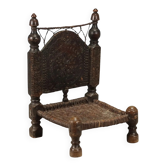
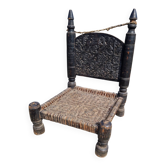
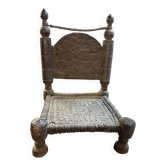
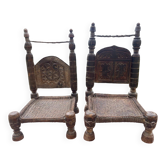
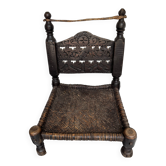
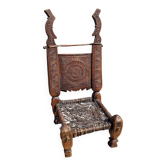
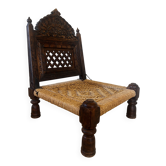
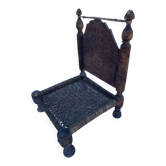
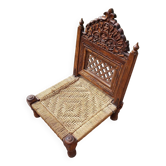
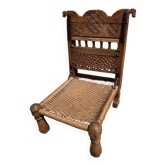
Early 20th century handmade low cedar chair, Nuristan, 1890s

- Dimensions :
- H85 x W53 x D50
- Color :
- brown
- Material :
- wood
- Style :
- world's craft
Early 20th century Nuristani hand-carved cedar chair – rare tribal artifact. This extraordinary low cedar chair is a unique handmade piece crafted in the early 1900s in Nuristan (historically known as Kafiristan), a remote mountainous region of Afghanistan. Carved from a single piece of aromatic cedar wood, it features a distinctive geometric and zoomorphic design, typical of the region’s pre-Islamic woodcarving traditions. The seat’s low profile and sturdy construction suggest it was used for ceremonial or elite domestic purposes. Condition: Excellent vintage state – structurally sound with expected age-related wear. Rich patina from decades of use and natural aging. Minor cracks and weathering that enhance its authenticity. No restorations – completely original. Historical & cultural significance: Nuristani woodcarving is renowned for its intricate patterns, blending Indo-Iranian and Central Asian influences. Before Islamization in the late 19th century, Nuristan was called Kafiristan ("Land of the Infidels") and practiced animist traditions. Similar chairs were often used by tribal elders or shamans during rituals. Collectors prize these pieces as rare survivors of a vanishing craft—most were destroyed or repurposed after the region’s conversion. Why this is special: Extremely rare – few such chairs exist outside museums. A bridge between art and anthropology – each carving tells a cultural story. Perfect for collectors of tribal art, ethnographic furniture, or Islamic-world antiques. Provenance: Acquired from a private European collection of Asian artifacts. A museum-quality piece of Central Asian heritage – not just furniture, but history carved in wood.
Dining chairs: other similar vintage pieces
Discover more similar items- -43%
- -41%
- -43%
- -21%
- -37%