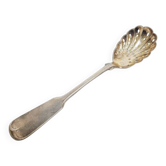
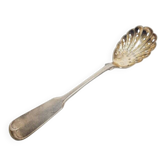
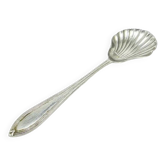
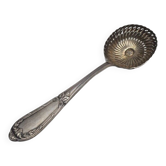
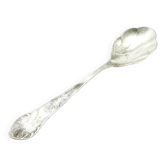
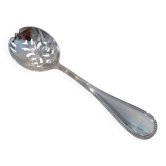
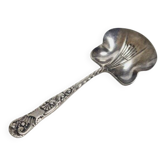
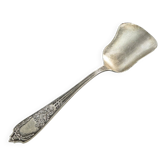
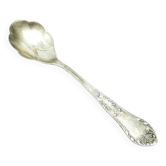
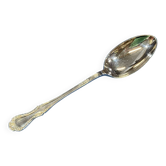
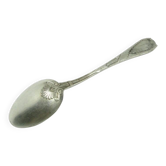
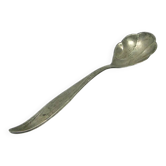
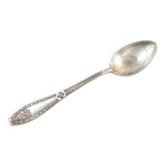
Absinthe spoon, silver-plated brass, Germany, early 20th century

- Dimensions :
- H17 x W1 x D3
- Color :
- silver (Color)
- Material :
- linen
- Style :
- art nouveau
An absinthe spoon made of silver-plated brass, created in Germany at the beginning of the 20th century, is an example of tableware craftsmanship from the Art Nouveau era. The working part, shaped like a delicate shell with regularly arranged perforations, was used to slowly dissolve a sugar cube during the classic absinthe ritual. The elongated, slender handle is decorated with raised plant and floral motifs along the edges – details characteristic of the Art Nouveau style, where fluid lines and naturalistic ornaments defined the aesthetic framework of everyday objects. The spoon has a finish in warm, slightly patinated silver with a matte-glossy surface, visible traces of patina, minor scratches, and oxidation spots typical for the age of the item. The construction remains solid, with no visible repairs or damage; preserved in very good condition, with no signs of restoration. This spoon echoes the quiet voice of the fin de siècle – a moment when art permeated daily rituals, and every detail mattered. The silvery finish, worn by time, and the soft, flowing lines evoke the atmosphere of Berlin cafes and salons, where the nobility of the material met the unhurried celebration of the moment. The plant ornaments seem to tell of a fascination with nature, and the shell-like shape intricately emphasizes the role of the object in the ceremonial world of old drinks. The absinthe spoon can be a refined accent on a classic bar tray, especially alongside thick glass goblets and a period decanter. It pairs well with other Art Nouveau elements or eclectic collector's accessories – it can be displayed on a mirrored shelf, in a showcase, or combined with porcelain of organic forms. It will bring an authentic belle époque atmosphere to a vintage-style interior, a historic bistro, or a modern bar with a touch of nostalgia.