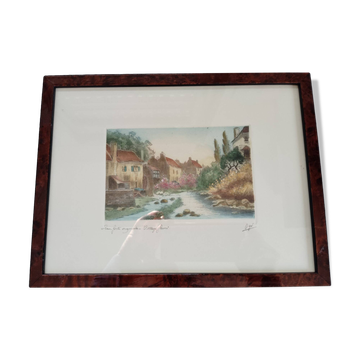
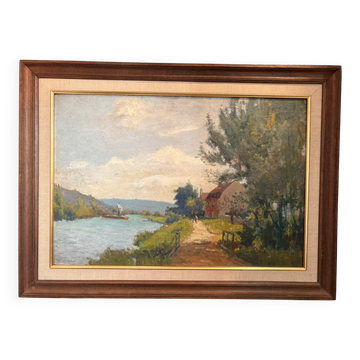
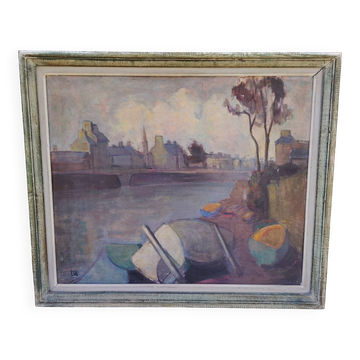
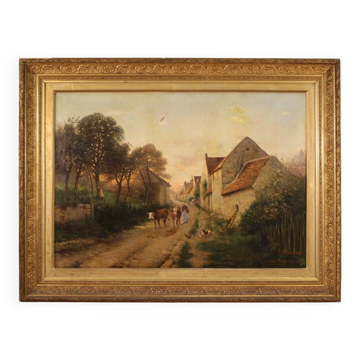
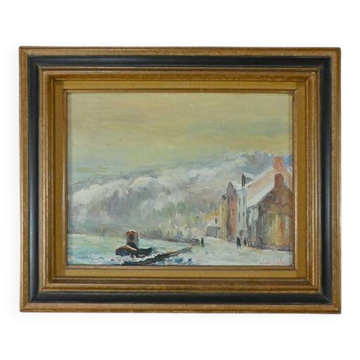
Impressionist painting - Watercolour and gouache - French school around 1900

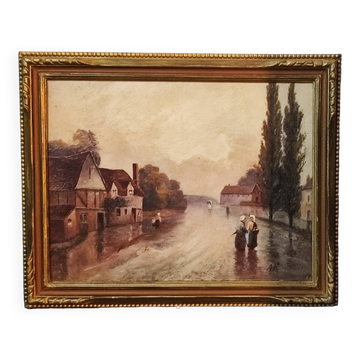
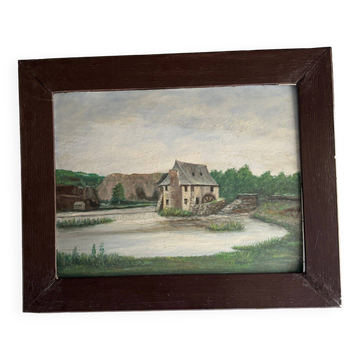
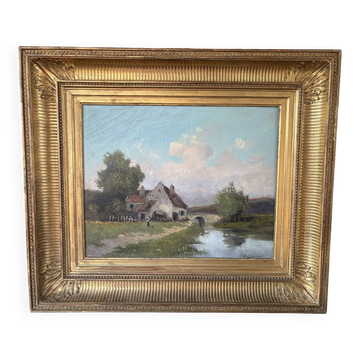
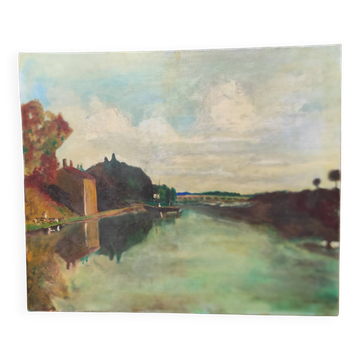
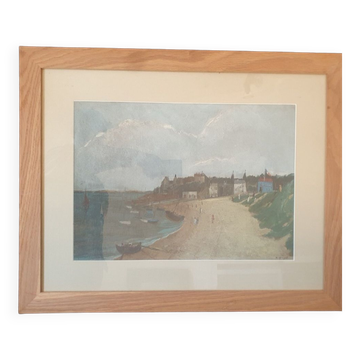
I propose a "gouache" watercolour in perfect condition depicting a lively rural scene set at the end of the 19th century. This work belongs to the rustic realism and naturalism of the French school. The artist focuses on depicting the daily life of the countryside with precision and nobility. At that time, many artists travelled through the French provinces to create topographical and bucolic views intended for galleries in large cities or for a bourgeois clientele eager for regional landscapes. The steep hill in the background and the small wall made of large cut stone blocks (on the right) recall the rural architecture of Périgord or Quercy. The raising of geese in the foreground was a dominant and omnipresent activity in these regions at that time. The work is part of the tradition of romantic realism of "popular vedutism" around 1900. The artist masters watercolour with effects of lightness and uses gouache to provide a denser texture. The muted and earthy colour palette is typical of the pigments of the time. It includes ochres, browns (Sienna earth, shadow), grey-blues (sky, roofs), various greens (foliage), and rust reds (tiles, apron). The figures are painted with contrasts of shadow and light without pronounced black outlines but with precise touches of gouache. Frame dimensions: 64 X 51 cm. Artwork dimensions: 38 X 25 cm. A talented regionalist painter from Touraine, Berry, Limousin, or Dordogne is the author of this work. Artists such as Maurice LEVIS, Albert Henri DAGNAUX, Henri HARPIGNIES (or his many students), and Gaston ROULLET worked in this precise vein between 1890 and 1910. This painting is a charming and lively rural genre scene typical of the romantic turn of the century.
Antique paintings: other similar vintage pieces
Discover more similar items- -23%
- -14%
- -14%
- -35%
- -49%
- -17%
- -10%
- -20%
- Sold out