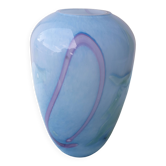
Vase, Polish modernism, purple glass, designed by J. Słuczan-Orkusz, Poland, 1970s

- Dimensions :
- H20 x W16 x D16
- Color :
- purple
- Material :
- linen
- Style :
- modernist / bauhaus
A vase designed by Jerzy Słuczan-Orkusz for the Krakow Glass Institute in the 1970s is an example of Polish modernism, where the organic form harmonises with the discipline of geometric drawing. The body of the vessel takes on a rounded, bulbous silhouette with a gently narrowed, flat rim, made of semi-transparent, cool purple glass with a smoky tone. The surface features a subtly satin finish that softly reflects light. The most distinctive detail is the massive, hand-applied glass wrap in a darker, brownish-purple shade, spiralling around the form. This visual effect creates a contrast of textures and enhances the three-dimensionality of the composition. The bottom of the vessel has noticeably thickened glass – a detail emphasising both the craftsmanship and durability. No visible chips, cracks or conservation interventions. The condition is very good – the original character of the form and detail has been preserved. In this glass form, the spirit of the 1970s resonates – a time when Polish artistic glass boldly flirted with modernity, without losing the tension-building simplicity. The organic, rounded body is combined here with the dynamic, almost painterly gesture of the hand-applied thread, as if the vase tells of a free experiment with form, while also reflecting the discipline of glassmaking. The cool, purple colour blends with the light, revealing subtle, misty reflections, to which the quiet, pulsating decorative thread adds rhythm – the whole evokes a calm, slightly dreamy impression. This vase can be combined with other forms from the era of Polish modernism – it will look good both alongside minimalist, geometric vessels and a broader collection of coloured or satin-finished glass. Placed on a low sideboard of light wood or a neutral stone top, it will introduce a note of lightness and refined experimentation to the interior. It can be paired with a single branch or left empty to highlight the play of light and shadow on the surface. Classic mid-century modern interiors, as well as contemporary, eclectic arrangements, will bring out its unique character.
Vases: other similar vintage pieces
Discover more similar items- -15%
- -17%
- -29%
- -36%
- -29%
- -15%
- -15%
- -34%