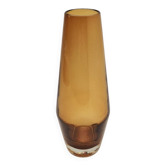
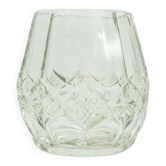
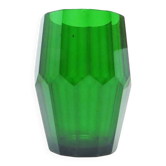
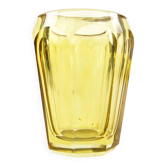
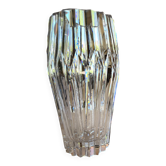
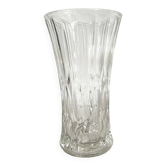
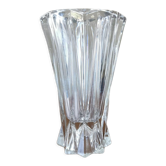
Art Deco vase, crystal, Czechoslovakia, 1930s

- Dimensions :
- H14 x W9 x D9
- Color :
- transparent
- Material :
- glass and crystal
- Style :
- art deco
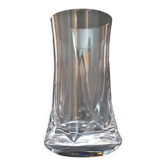
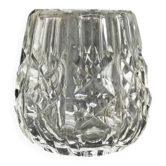
Art Deco vase from the 1930s, made by the renowned Moser manufactory in Czechoslovakia, is a classic example of interwar glass craftsmanship. The object is made entirely of high-quality, faceted crystal in a saturated, transparent amber-honey shade with a uniform, warm golden colour. The vase's form remains geometric and tapers towards the bottom, with pronounced vertical walls forming a system of several facets that bring out the depth of light and transparency of the material. There are no additional decorations – the ornament is the harmonious play of light, the precision of cuts, and the shine of the perfectly polished surface. The base with a wide, stable profile emphasizes solidity, and the Moser signature confirms authenticity and high quality. Condition is very good: no visible chips, cracks, or signs of repair, only minimal, age-appropriate signs of use. This vase speaks with the voice of an era when geometry and noble simplicity set a new direction for artistic beauty. The reflection of light on the intricately cut facets recalls the years when elegance needed no ornament, and crystal objects accompanied home ceremonies in the finesse of Art Deco. Its warm, honey shade and clarity of material evoke the atmosphere of refined yet friendly everyday life of the 1930s, telling a story about the need for light and brilliance in times of great change. The vase can be displayed as a standalone accent on a classic console with dark veneer or a low modernist chest of drawers – especially where a direct stream of light will highlight the complexity of the crystal facets. It will add character to eclectic arrangements and complement a collection of vintage glass in minimalist spaces. It is worth pairing it with elements of simple lines – e.g., collector's vases of clear or smoked glass, black ceramics, or a single sculptural branch – so that its colour and texture become the focal point of the arrangement.