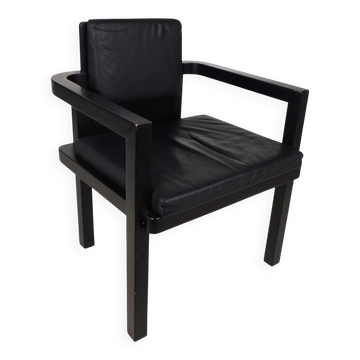
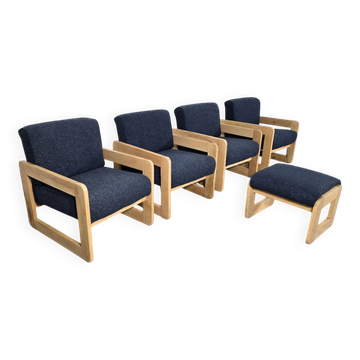
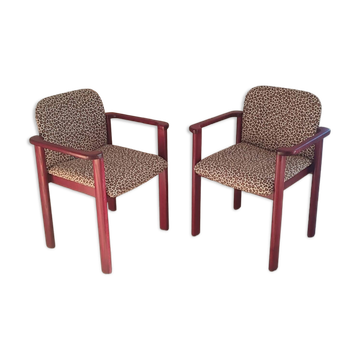
Set of 4 Tecta D51 beech dining/conference chairs by Walter Gropius, 1923

- Dimensions :
- H78.5 x W60 x D57
- Color :
- black
- Material :
- wood
- Style :
- modernist / bauhaus
This exceptional set of four D51 Fagus armchairs by Walter Gropius, manufactured by Tecta, combines the clear design language of the Bauhaus with high-quality materials and a striking architectural design. The combination of black-lacquered ash wood frames and black leather cushions gives the chairs a timeless elegance. With their geometric construction and characteristic armrests, they are among the remarkable seating designs of early modernism. All four chairs are in excellent condition. The black-lacquered ash wood frames show a slight, age-related patina that underscores their authentic character. The black leather cushions of the seats and backrests are perfectly preserved. Overall, the entire set is in good condition. The D51 was originally created for the vestibule of the Fagus-Werke in Alfeld, whose pioneering architecture Gropius developed together with Adolf Meyer from 1911. The building is considered one of the earliest and most significant examples of modern industrial architecture and was added to the UNESCO World Heritage List in 2011. The design kinship between the building and the D51 is unmistakable: clear lines, geometric structures, and the consistent combination of function and aesthetics characterize both the architecture and the piece of furniture. The construction of the chairs is characterized by their precisely crafted ash wood frames. The wide-reaching armrests transition into the characteristically shaped back section and form an expressive silhouette together with the straight legs. The separately upholstered seats and backrests are covered in supple black leather and create an appealing contrast to the strict geometry of the wooden construction. At the same time, the generous proportions and the comfortable upholstery offer a high level of seating comfort. The German furniture manufacturer Tecta from Lauenförde has dedicated itself particularly to the preservation and further development of significant Bauhaus designs. In close coope
4.86 ()
Dining chairs: other similar vintage pieces
Discover more similar items- -42%
- -13%
- -26%
- -10%
- -66%
- -21%