














Large Romantic Alabaster Sculpture, Italy, late 19th century, Romeo and Juliet

- Dimensions :
- H50 x W23 x D13
- Color :
- white
- Material :
- stone and plaster
- Style :
- classic
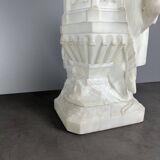
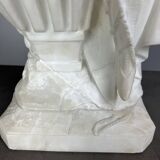
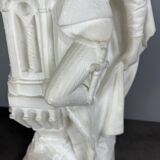
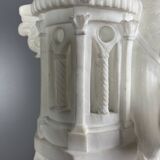
Alabaster sculpture representing Romeo and Juliet, Italy, 19th century. Work of great finesse, particularly in the treatment of the faces, hands and draperies, with a remarkable effect of fluidity on the reverse of the coin. The scene shows the dramatic embrace of the two lovers, Romeo in light armor and Juliet leaning towards him from a balcony in neo-Gothic architecture. Some fine cracks are visible, as well as an old restoration of a filled crack. Beautiful even patina. A brown mark on Romeo's left shoulder. Period: late 19th - early 20th century. Literary and romantic subject: Romeo and Juliet is a particularly popular theme in the Romantic and post-Romantic era. It is found abundantly in the sculpture and painting of the second half of the 19th century, a time when Shakespeare was rediscovered and celebrated in Europe. Realism of the faces, softness of the expressions, neo-Romantic aesthetic of the second half of the 19th century. The balcony scene, Romeo climbing, Juliet leaning... Very "theatrical" spirit. The drapery work, ample and fluid, is characteristic of the Italian and French workshops of the end of the 19th century, which took up the classical codes but with a more sentimental execution. Alabaster is widely used in decorative sculpture of the 19th century, because it is less expensive than marble and allows a very smooth and luminous rendering. Dimensions: • Height: 50 cm • Width: 23 cm • Base: 18 X 13.5 cm • Weight: 14.4 kg.