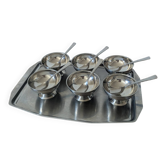
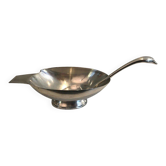
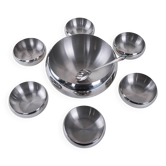
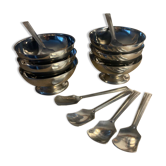
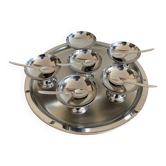
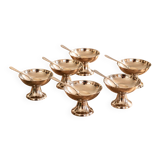
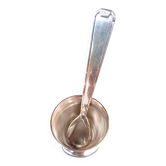
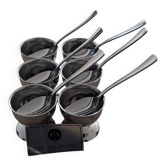
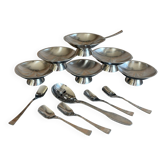
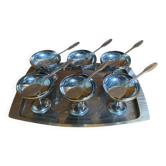
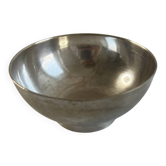
Art Deco salt shaker, nickel-plated brass, Krupp-Berndorf, Germany, 1930s

- Dimensions :
- H6 x W2 x D2
- Color :
- silver (Color)
- Material :
- linen
- Style :
- art deco
A salt shaker made in Germany in the 1930s for Krupp-Berndorf is an example of utilitarian tableware in the Art Deco style. The form revolves around minimalist geometry: the bowl rests on a distinctly flared, round base providing stability, and its cool, silvery colour comes from the nickel-plated coating on the brass body. The surface finish is smooth, satin, with a slightly matte character, emphasising the simplification typical of the era. The set includes a slender spoon with subtle, linear decoration along the handle, stylistically matched to the whole. The interior of the vessel is covered with a delicate, natural patina, attesting to the authenticity and age of the item. Condition is good – visible minor signs of use, slight discolouration and tarnish (especially on the spoon), no dents or mechanical damage. The form of this salt shaker tells the story of the 1930s – a time when the table was meant to be both orderly and functional, but not devoid of subtle charm. The geometry of the vessel speaks the language of order and discretion: balanced proportions, economy of lines, coolness of metal. The nickel-plated finish reflects soft light, as if wanting to capture the echo of tables of the time, where modernity met elegance. The adhering patina suggests that this is an object with a certain collective memory – not only utilitarian, but also a discreet witness to the tradition and simplicity of those days. This salt shaker can be an element of a setting in both a classic, Art Deco interior and a vintage collector's display. It can be successfully combined with nickel-plated or chrome cutlery, porcelain with geometric patterns or glass containers with a minimalist cut. It will work well on a modern table as a detail contrasting with a simple linen napkin or alongside brass candlesticks and original spice sets, emphasising the dialogue between tradition and modernity.
Salt cellars & pepper mills: other similar vintage pieces
Discover more similar items- -16%
- -57%
- -22%
- -11%