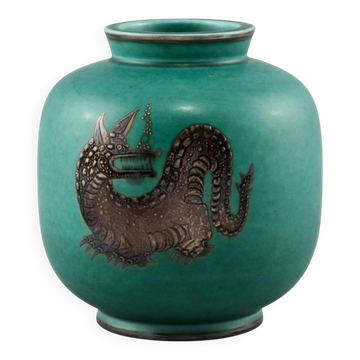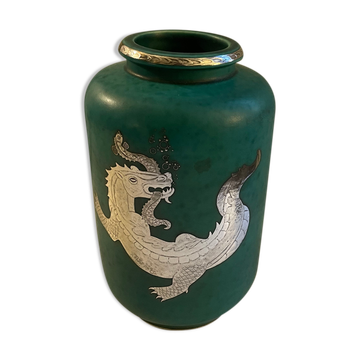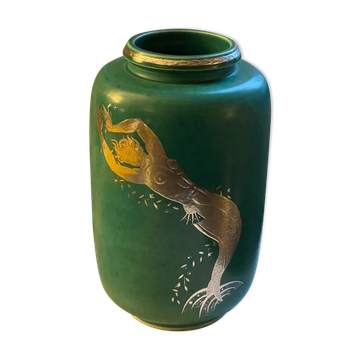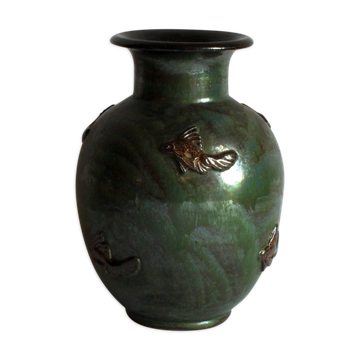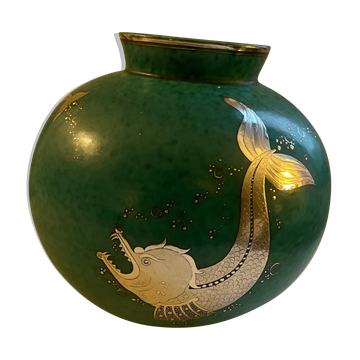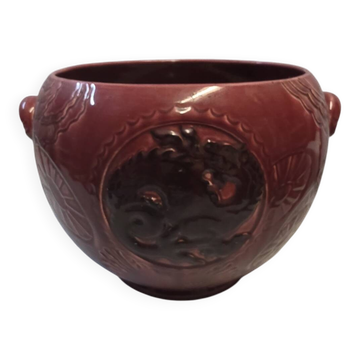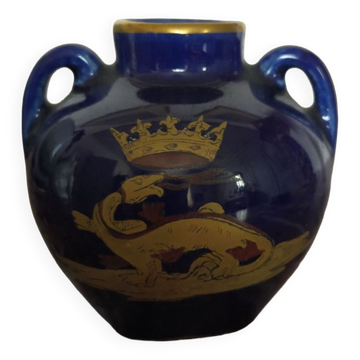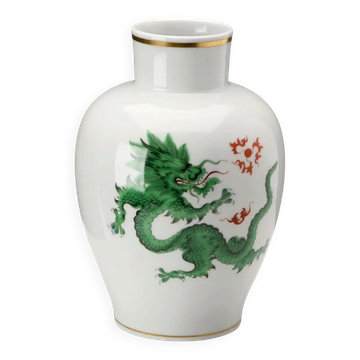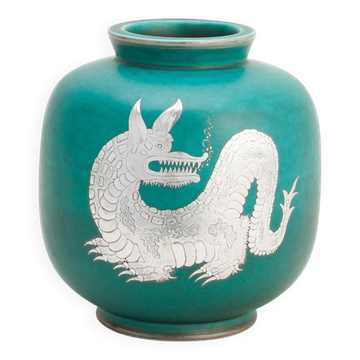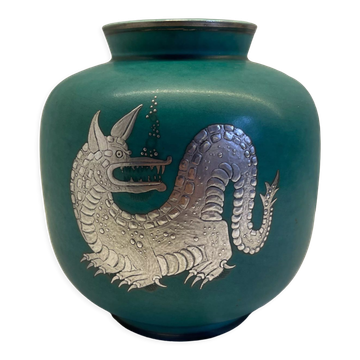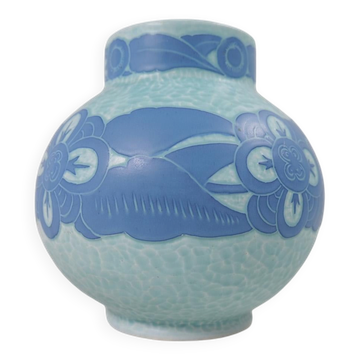
Wilhelm kage vase in ceramic "argenta" gustavsberg sweden 1940s marked
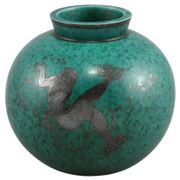
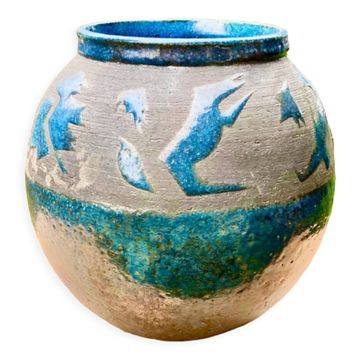
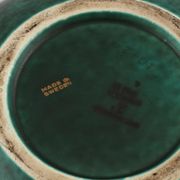
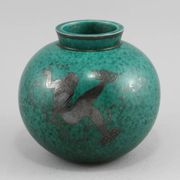
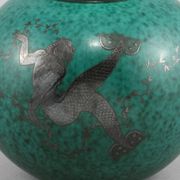
Round vase by Wilhelm Kåge "ARGENTA" Gustavsberg Sweden 1940s. Marked on the bottom with "Gustavsberg ArgentA", the model number, and "Made in Sweden". Dark green glaze with a speckled finish and bright colours. Silver decoration of a mermaid. Height 20 cm. More images available upon request. Wilhelm Kåge was a Swedish artist and ceramicist. Kåge is known for his ceramics for the Gustavsberg porcelain factory, where he served as artistic director from 1917 to 1949. Kåge studied from 1910 under Carl Wilhelmson at the Valand Academy of Art in Gothenburg, and then under Johan Rohde in Copenhagen, where he met Gösta Adrian-Nilsson (GAN) and became involved with modern art. He studied graphic arts in Munich and began his artistic career designing posters for theatres and exhibitions. His connections with Gustavsberg were facilitated by the Swedish Society of Craft and Design, as Gustavsberg needed new products for the exhibition on houses held at Liljevalchs in 1917. He then designed around thirty different dinnerware sets, as well as art pottery, coloured earthenware, stoneware, and various series of art pottery such as Carrara, Surrea, and Våga. At the Stockholm exhibition in 1930, Kåge presented the future commercial success of Gustavsberg, "Argenta", a series of art pottery primarily glazed in green, but also in red, blue, brown, and celadon green, and decorated with various silver patterns based on Kåge's sketches. ARGENTA became very popular and was produced until the 1970s. In 1942, Kåge, along with Stig Lindberg, created the Gustavsberg Studio, which became a sort of aesthetic laboratory for art pottery.