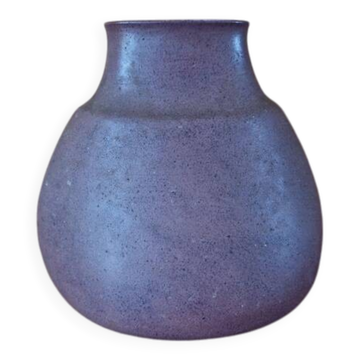
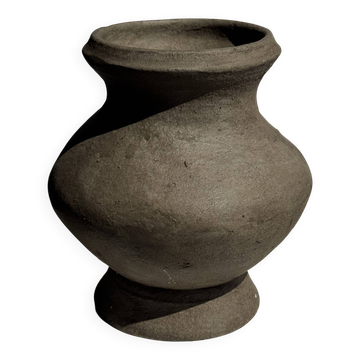
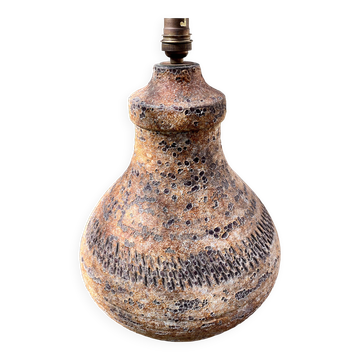
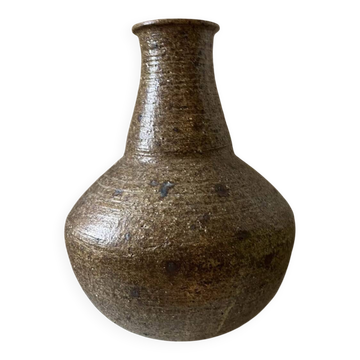
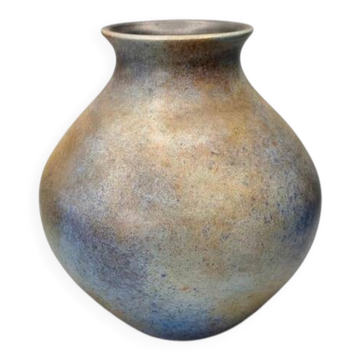
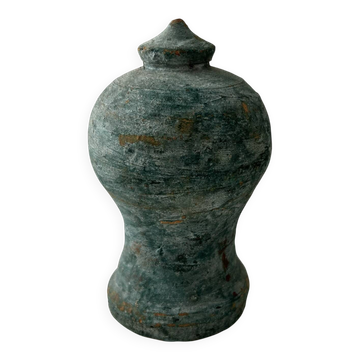
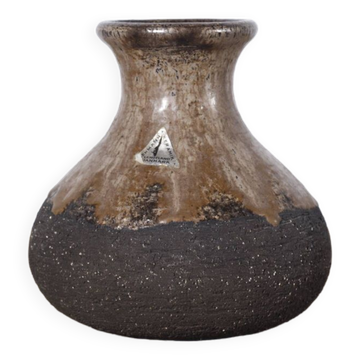
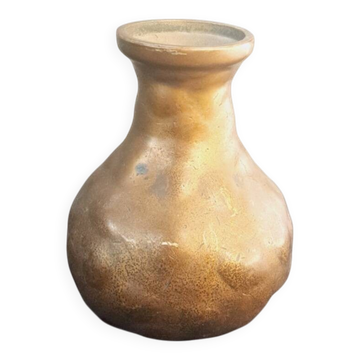
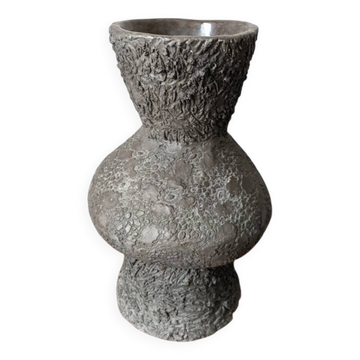
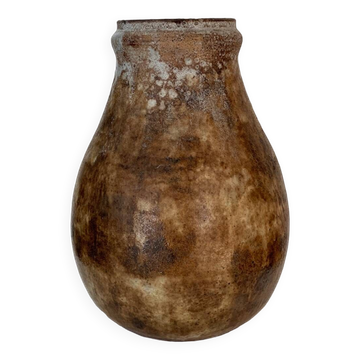
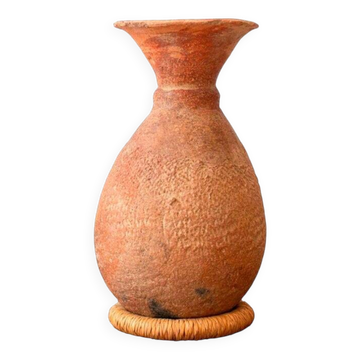
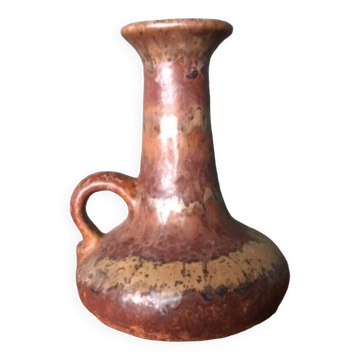
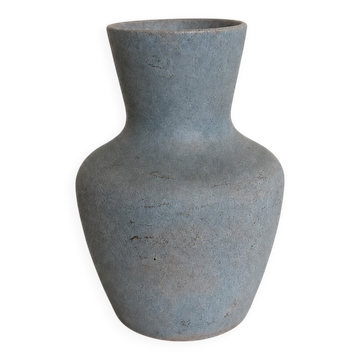
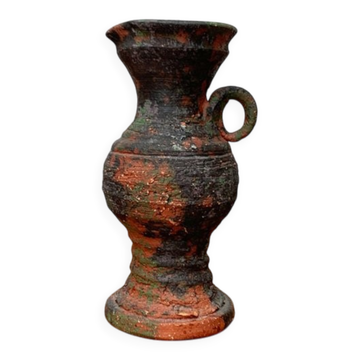
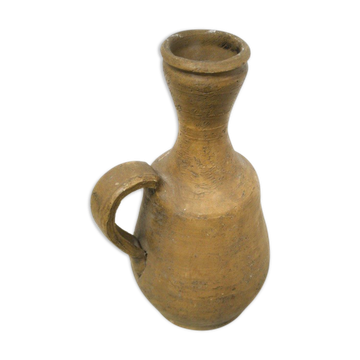
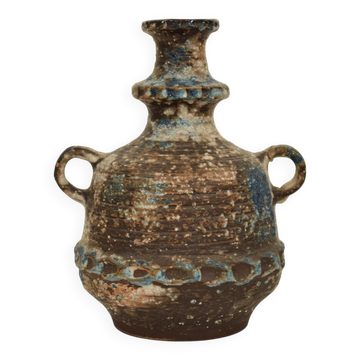
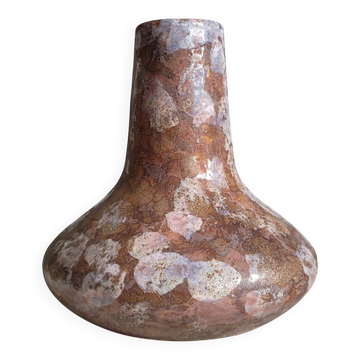
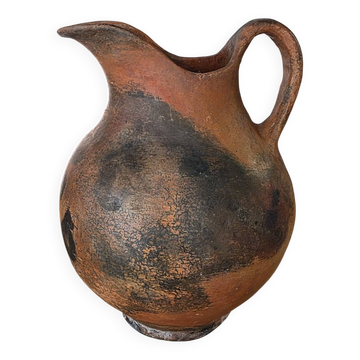
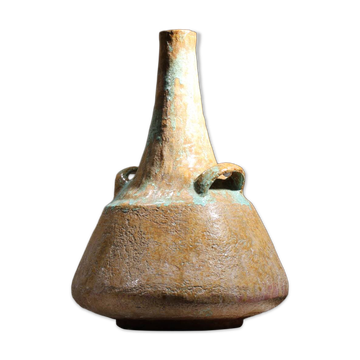
Claire Debril (1927-2021) - Ceramic vase built using the coiling technique.
This item has found its owner, but other one-of-a-kind items await you. 👇
Discover similar items- Dimensions :
- H17 x W14 x D14
- Color :
- blue
- Material :
- ceramics, porcelain and earthenware
- Style :
- vintage
Claire Debril (1927-2021) Grey-blue ceramic vase made using the coiling technique. With a low, flattened belly and a high body with shoulders, slightly resembling a double gourd. A magnificent piece by this great artist. Signed underneath Debril. Height: 17cm. Diameter: 14.5cm. Very good condition. Provenance: Estate of a patron of the artist. Several pieces for sale by this artist. *French sculptural ceramist, the lady of the coil. ‘The form is only valid through the heartbeat that created it.’ Claire Debril. In the October 2019 issue of the Revue de la Céramique et Verre, at the age of 93 and still active, Claire Debril explains to Mardochée Franco that she has always loved working with the coiling technique to feel the clay with her fingertips. Her work is ‘rhythmed by void and fullness’, a way of existing through inner emptiness, always in search of harmony and resonance in space. At 20, in 1946, in Montparnasse, she meets the sculptor Henri Laurens, who teaches her ‘form in space’, the void, the hollow, the full. From 1947 to 1950, she spends three years at the Dominican convent of Béthanie to seek self-confidence and ‘restructure’ herself. In 1956, she marries Bernard Soleil and begins to learn ceramics in her husband’s workshop. She starts producing high-quality utilitarian items (jugs, plates, bowls, teapots, etc.). 'A jug or a teapot is a sculpture. Adding a simple handle or spout is not innocent as they alter the surrounding space.' In 1970, the couple separates. Bernard decides to move to the Alpes Maritimes in Coaraze. She stays in Paris for two years before creating her own workshop in Vincennes in 1972. She dedicates herself exclusively to bowls, teapots, and shaped pieces, always using the coiling technique: matte glazes in muted tones applied in successive layers, softened angles, where the light, caressing the piece, reveals the symbiosis of a perfect harmony between the glaze and the form.