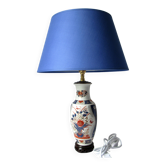
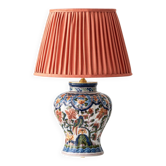
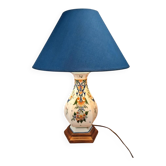
Delft-style ceramic table lamp from France around 1900 with a new blue velvet shade.

- Dimensions :
- H70 x W30 x D30
- Color :
- blue
- Material :
- linen
- Style :
- vintage
A richly hand-painted French Delft-style ceramic table lamp (c.1900–1920) with a new blue velvet shade — a vibrant antique accent for Chinoiserie, French Country, or eclectic interiors; newly wired and ready to use. Meticulously handcrafted into a table lamp by Amitābha Studio in Amsterdam, this one-of-a-kind piece is made from an early 20th-century French faience vase (c.1900–1920) in the Delft-revival style. The ceramic base displays exuberant hand-painted decoration—vivid birds, scrolling foliage, and stylized florals in cobalt blue, burnt orange, golden yellow, and green—set against a softly aged, tin-glazed white ground. Attributed to the Desvres ateliers and bearing the characteristic pseudo-Delft “LF” mark, the vase reflects the period’s fascination with Dutch Golden Age ceramics. Makers such as Géo Martel revived 17th-century Delft motifs with distinctive French flair: richer palettes, denser ornament, and a painterly, almost textile-like surface. This lamp captures that synthesis beautifully—ornate yet warm, historical yet lively. To complement the rich polychrome base, it has been paired with a custom slate-blue velvet lampshade made in a Dutch atelier. The plush texture and deep color bring a modern counterpoint to the ornate decoration, while the gold fabric cord provides an elegant finishing touch. The transformation into a lamp was done entirely non-invasively, preserving the ceramic’s integrity. With its vibrant palette and classic silhouette, this lamp sits comfortably in Chinoiserie, French Country, Bohemian, or eclectic settings—bringing atmosphere, craftsmanship, and a touch of Old World artistry to any room. About Géo Martel Georges Martel (Géo Martel) produced high-quality Delft-revival ceramics in Desvres from circa 1900 through the 1930s–40s. His work is recognized for its historical fidelity, nuanced brushwork, and richly layered palettes. Martel’s pieces—especially those bearing pseudo-Delft marks—are considered among the most collectible in the French Delft-revival tradition. About Amitābha Studio Amitābha Studio transforms historic ceramics into one-of-a-kind lighting objects using non-invasive techniques that preserve each piece’s integrity. Shades are crafted from fine textiles, and each lamp is finished with carefully selected cords, hardware, and handmade brass elements. The studio’s work centers on sustainability, cultural heritage, and timeless design.
Bedside and table lamps: other similar vintage pieces
Discover more similar items- -25%
- -20%
- -11%
- -42%
- -11%
- -12%