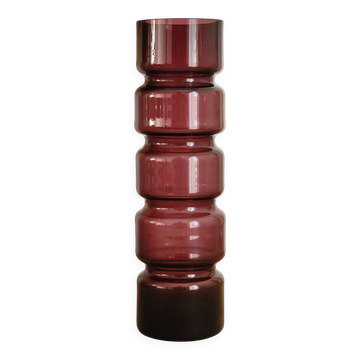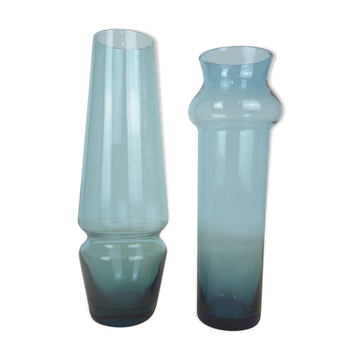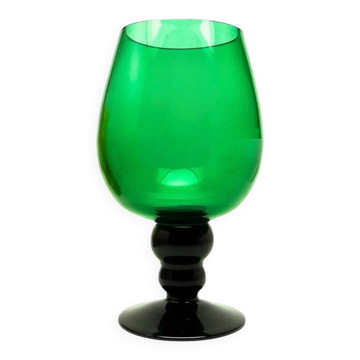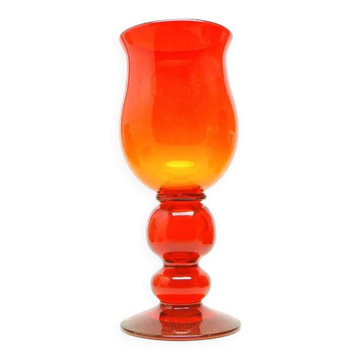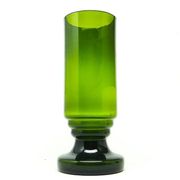

Postmodernist vase, glass, Poland, 1970s
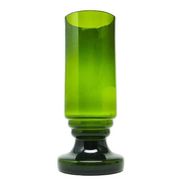
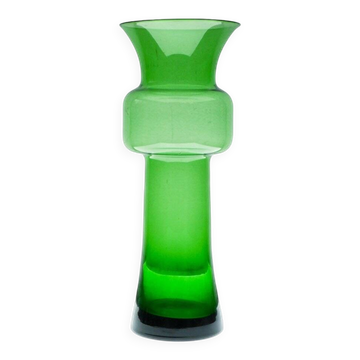
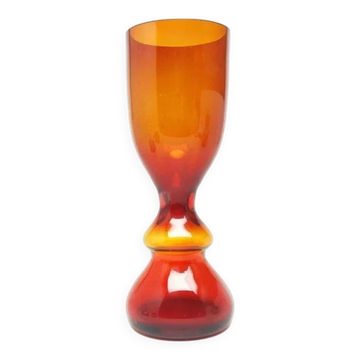
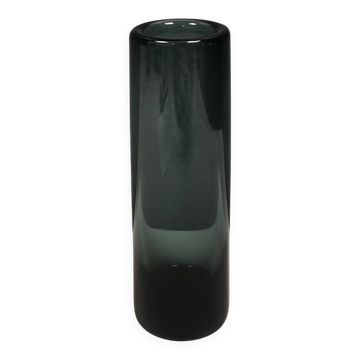
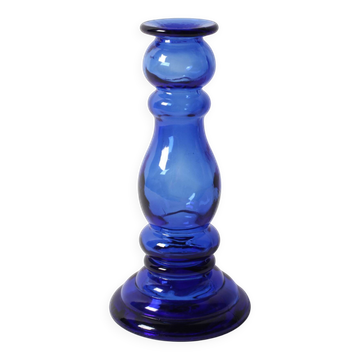
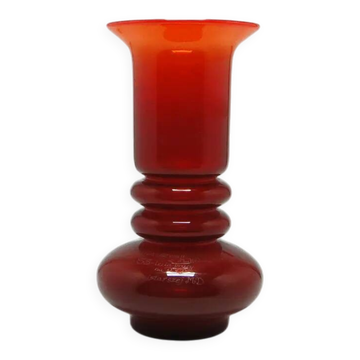
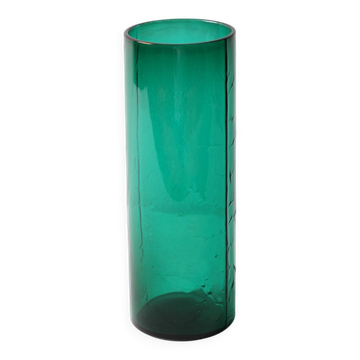
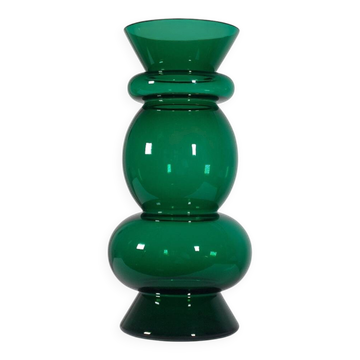
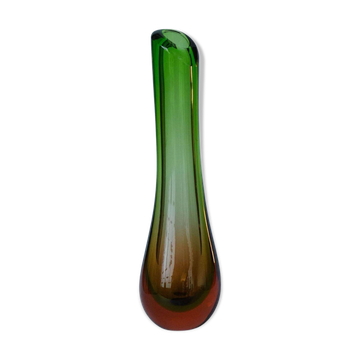
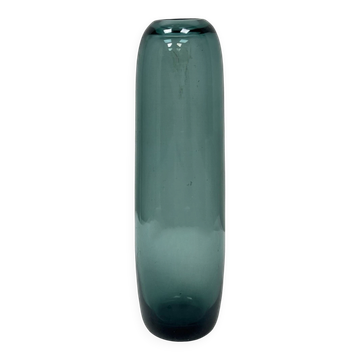
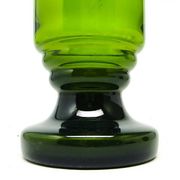
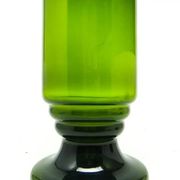
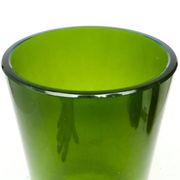
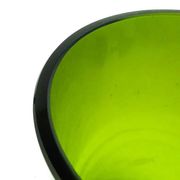
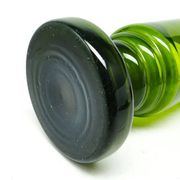
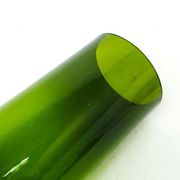
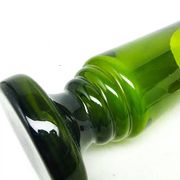
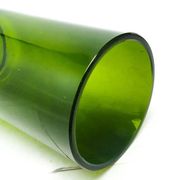
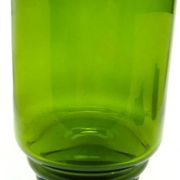
A large, heavy vase made of double-layered glass was produced by the Sudety Glassworks in Poland in the 1970s. The vase stands out with its intense, medium-saturated olive-green colour, which takes on yellowish tones depending on the thickness of the glass and the angle of the light. The shiny, smooth surface with a distinct reflection emphasises the clarity of the material and the high quality of workmanship. The form is based on a long cylindrical body, gradually transitioning into a massive, rounded foot and a wide, disc-shaped base; the whole is monolithically constructed without visible joints or decorations. The edges of the opening are cut straight, with a slight bevel. The vase is devoid of decorative patterns, and the glass mass shows no inclusions or bubbles. Condition is very good: the glass remains free of scratches, cracks, and dullness, and all elements are original from the production period. This solid silhouette hides a story about Polish applied art of the 1970s, where the search for form met technical precision and a love for bold colours. This vase seems to draw energy from the geometry of everyday life: its green, enlivened by yellow reflections, brings a reminiscence of an era when postmodernist freedom slowly permeated the language of design. The glass—homogeneous and heavy—speaks here in the language of architectural simplicity, suggesting that expressive power can lie in subtle control of light and proportion. The vase will fit well in arrangements inspired by late mid-century modern as well as interiors with postmodernist accents. It can be combined with furniture with balanced geometric lines or placed solo on a light wood console to highlight the clarity of the colour and the shine of the glass. It works well as a central point in the living room, where surrounding it with natural fabrics (e.g., linen, jute) and minimalist decorations will allow it to maintain its architectural impression. It is worth combining this vase with ceramics in neutral shades or a single branch to expose the depth of the green and the play of light on the glass surface.