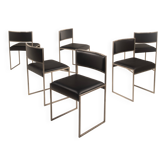
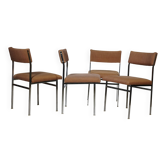
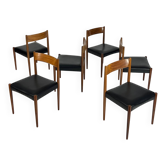
SQ-AL chairs by Willy Rizzo for Maison Willy Rizzo – brass version 1970

- Dimensions :
- H77 x W48 x D41
- Color :
- beige
- Material :
- linen
- Style :
- modernist / bauhaus
This elegant set of four SQ-AL model chairs was designed by Willy Rizzo for his Maison Willy Rizzo during the 1970s, perfectly embodying the refined and architectural aesthetic that characterizes the designer’s production in that period. The chairs feature an essential geometric structure entirely made of brass-plated steel, whose clean lines and rigorous proportions reflect the strong influence of modernist architecture and the sculptural language typical of Rizzo. The structure is defined by a continuous profile that simultaneously outlines the legs and the backrest, creating a composition that is visually light yet at the same time solid and perfectly balanced. The linearity of the metal structure emphasizes the purity of the design and highlights the careful workmanship of the surfaces, with the warm brilliance of the brass interacting with the softness of the upholstery. Seat and backrest are upholstered in the original vintage alcantara in an elegant beige/camel tone, a material that gives the seating a pleasant tactile softness while at the same time conveying a sophisticated character. The contrast between the velvety surface of the alcantara and the luminosity of the brass-plated steel creates a very refined balance between luxury and minimalism, a distinctive hallmark of Willy Rizzo’s work. The SQ-AL model perfectly represents Rizzo’s ability to combine precious materials with an extremely rigorous formal language. The proportions are compact and the silhouette is intentionally essential, allowing the metal structure to become the dominant element of the design without sacrificing comfort. The set presents itself in excellent vintage condition, with the alcantara upholstery well preserved and the brass-plated steel structure showing only slight signs of time consistent with age. These chairs constitute a refined example of Italian design of the 1970s and can integrate perfectly in both contemporary interiors and more classic environments, making them ideal around a dining table or as accent seating in a sophisticated living space.