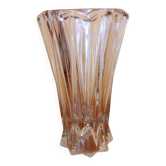
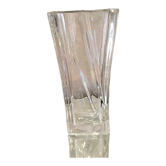
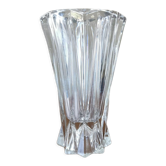
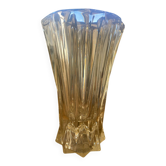
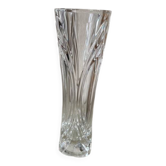
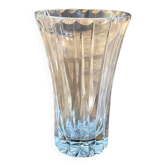
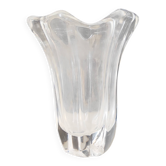
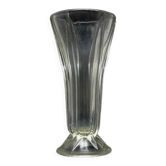
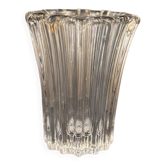
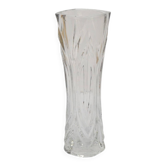
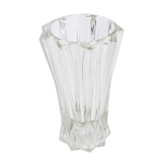
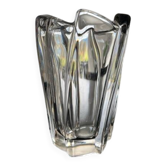
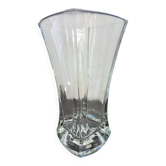
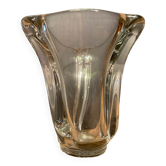
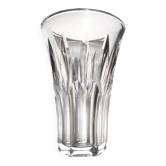
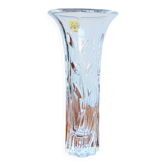
Art Deco vase, citrine crystal, designed by R. Hlousek, Moser, Czechoslovakia, 1930s

- Dimensions :
- H12 x W12 x D20
- Color :
- yellow
- Material :
- glass and crystal
- Style :
- art deco
Crystal vase designed by Rudolf Hlousek for the Moser glassworks, made in Czechoslovakia in the 1930s, is a model example of the Art Deco style. Made of transparent citrine crystal with varying intensity of colour – deepest at the massive base, brightening towards the dynamically undulating upper edge – it features precise, architectural vertical and diagonal cuts, typical of the geometric inspirations of the era. Deeply faceted cuts create a regular rhythm of light and shadow, emphasising the clarity of the thick glass and the shiny, highly polished surface. Its stable proportions, weight and sculptural presence make the vase harmoniously combine utility with decorative value; it can serve as a vessel for flowers or fruit, or as a standalone collector's object. Condition: very good, no chips or cracks, with minimal natural patina for its age, glass surface clear and clean. The vase echoes the era when geometry and light became the new language of luxury. Its faceted surface evokes the expression of 1930s modernist architecture, when glass masters translated monumentality and discipline into everyday forms. The thickness of the crystal and the yellow, citrine shade evoke the warm glow of morning sun igniting a living room interior, while the dynamic arrangement of cuts suggests the pulsing energy of a city at the beginning of the last century. This item tells its own story of elegance, where light itself becomes one of the main elements of the composition. The vase can be paired with minimalist, lacquered furniture or a marble console, where the citrine tone of the crystal will contrast with neutral, contemporary surfaces. It will work well in a collector's interior, surrounded by Art Deco objects such as silver trays or ceramic figurines, highlighting the dialogue between light and solid matter. In modern arrangements, it is worth combining it with a single branch or a minimalist floral composition – its geometric cuts will diffuse the light, becoming a subtle yet expressive accent in the space.