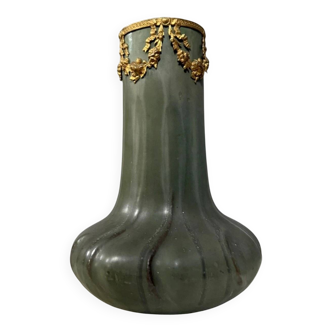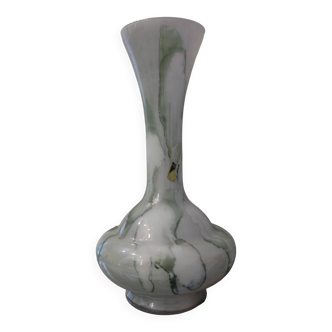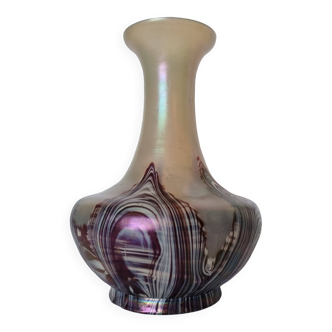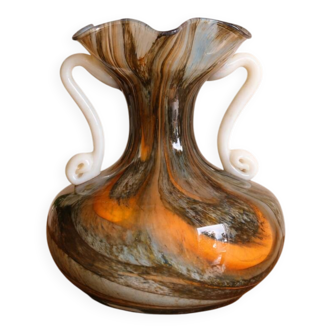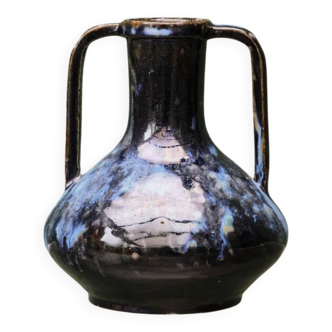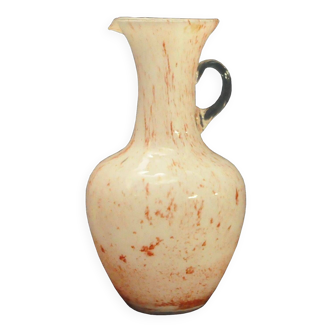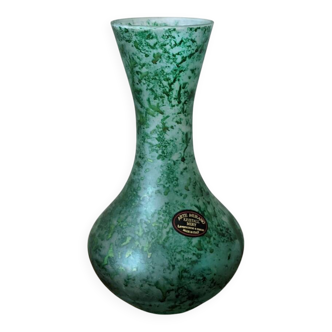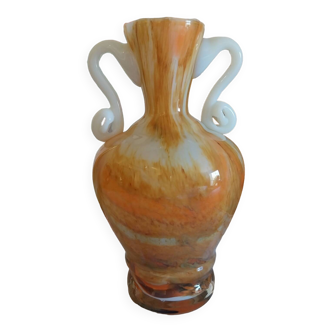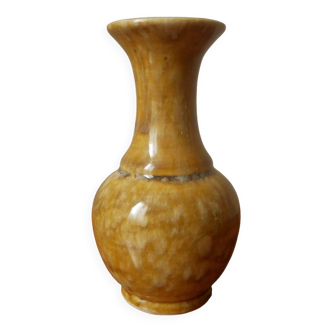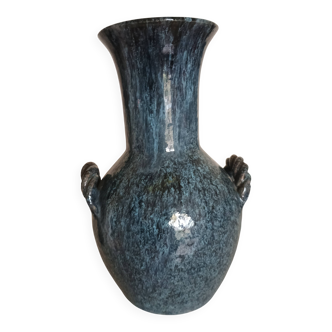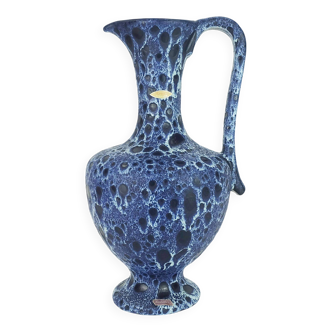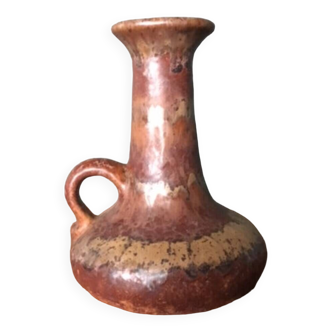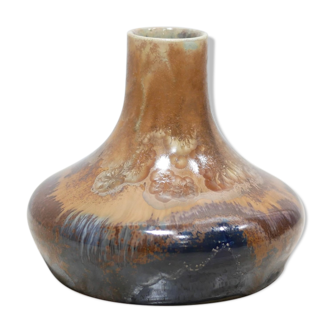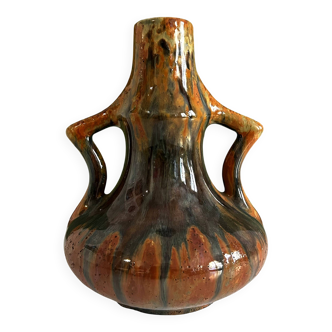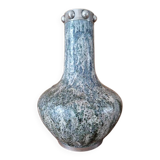
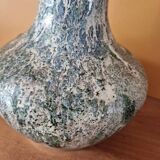
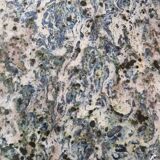
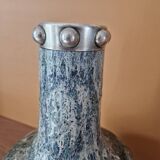
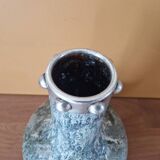
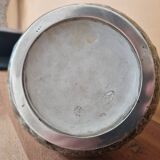
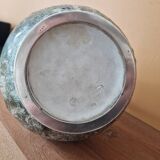
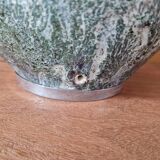
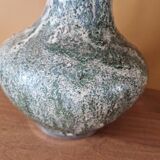
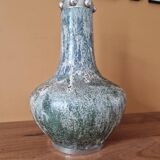
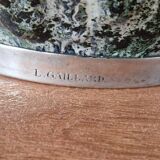
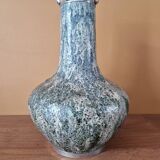


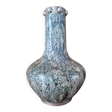
Lucien Gaillard (1861-1942) and the Glatigny workshop (1897-1902) Stoneware vase
- Dimensions :
- H31 x W23 x D23
- Color :
- grey
- Material :
- ceramics, porcelain and earthenware
- Style :
- art nouveau
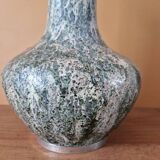
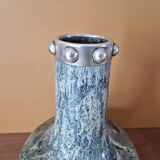
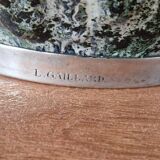
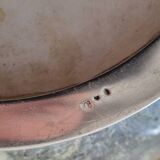
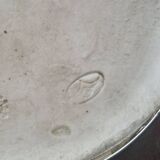
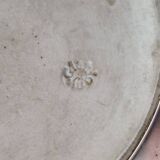
Lucien Gaillard (1861-1942) at the Glatigny workshop (1897-1902) Important stoneware vase. With a low body and a bulbous neck. The mount is made of 800/1000 silver with a boar hallmark. Art Nouveau period, 1900. Glatigny stamp underneath, signed L. Gaillard on the silver base. Magnificent work of extreme quality. Height: 31.5 cm. Diameter: approximately 23 cm. Diameter at the neck: 6.5 cm. Very good condition, with a hole for electrification. *Lucien Gaillard, born on 13 November 1861 and died on 23 November 1942 in Paris, was a French silversmith, jeweller, and glassmaker, one of the masters of Art Nouveau. Lucien Gaillard comes from a family of jewellers: his grandfather, Amédée Alexandre Gaillard (1811-1882), founded an art jewellery business in Paris in 1840, which was passed down to his son Ernest (1836-1909). Lucien was trained as an apprentice by his father from 1878 and took over the Paris establishment located at 107 rue La Boétie in 1892. He became a member of the Syndicate Chamber of jewellers, goldsmiths, and silversmiths. In 1900 in Paris, his creations were distinguished at the World Exposition, where he received the Grand Prix in his specialty. Seven years earlier, he was already a jury member at the Chicago exposition. In 1902, he was made a knight of the Legion of Honour. His style is deeply linked to Japonism. In his workshop, artists from Tokyo worked alongside him with materials such as horn and lacquer. From 1904 onwards, his production of art objects expanded. He produced vases, cane heads, hair combs, brooches, and pendants, inspired by floral and animal motifs (bee, butterfly, dragonfly, snake, etc.), using precious stones and metals. Dragonflies in horn, gold, emeralds, diamonds, enamel, and citrine, 1904, Rijksmuseum, Amsterdam. As a tin worker, he took a keen interest in patinas, varnishes, and alloys. Around 1910, he expanded his production to include glass.