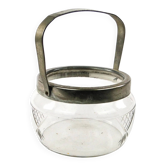
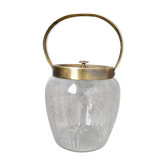
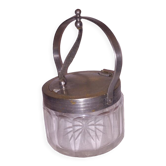
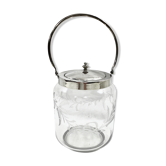
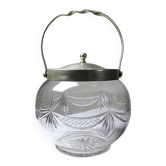
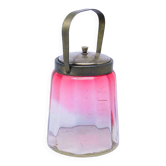
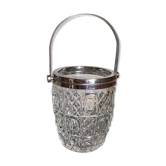
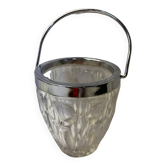
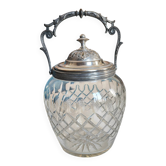
Art Nouveau sugar bowl, Belgium, early 20th century

- Dimensions :
- H15 x W10 x D10
- Color :
- transparent
- Material :
- linen
- Style :
- art nouveau
A sugar bowl from Belgium from the early 20th century features a glass, transparent bowl with gently rounded sides, decorated with a hand-cut grid and windmill pattern typical of the turn of the eras. Its body is topped with a wide, flat handle and rim made of matte metal—probably tin or a similar alloy—with a distinct patina and a rivet joining the metallic elements. The minimalist, functional connections and lack of ornamental metal decorations place this piece in the utilitarian Art Nouveau trend, drawing from both the decorative tradition of the late 19th century and the functionality of early 20th-century modernism. The condition can be described as good: there are minor internal stains, micro-scratches on the glass, and natural darkening of the metal, with no major damage or losses. This item allows you to touch the spirit of urban Belgium from over a century ago, where elegant simplicity emerged from everyday life. The smoothness of the glass and the matte metal subtly tell of the aesthetic transitions of that era: restraint in decoration goes hand in hand with a craftsman's respect for the material. The subtly outlined cut lines and raw yet balanced handle connections evoke the atmosphere of bourgeois salons, where coffee and tea created a slow ritual, and utilitarian objects gained the charm of everyday items—without excessive ornamentation. This sugar bowl will fit perfectly on a table in a classic arrangement with porcelain cups and a silver tray, as well as on a modern console or shelf made of patinated wood, introducing a subtle, vintage accent to the interior. It can be paired with simple glasses or minimalist ceramics to highlight the contrast between old craftsmanship and modern design. In arrangements inspired by the Art Nouveau style and the early 20th century, it will harmonize with pastel textiles and geometric patterns in the background, and in eclectic compositions—it will set a delicate reference point among various objects and textures.
Sweet boxes & sugar bowls: other similar vintage pieces
Discover more similar items- -15%
- -32%
- -15%
- -15%
- -15%
- -25%
- -15%
- -11%
- -14%