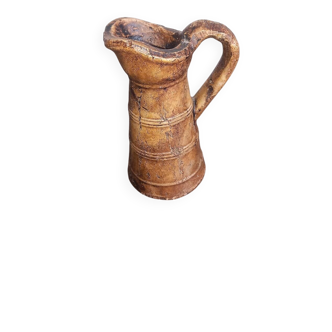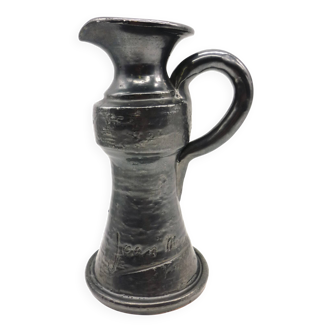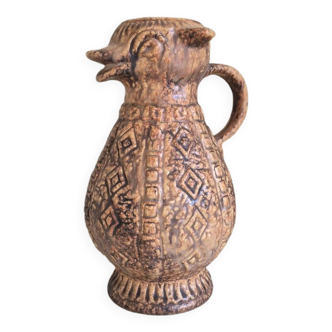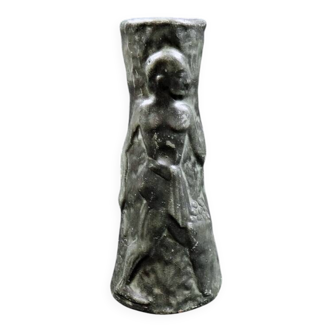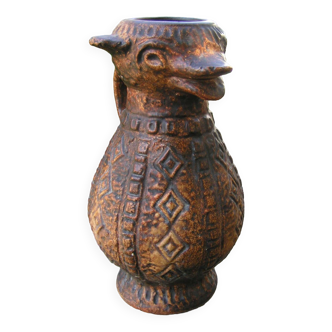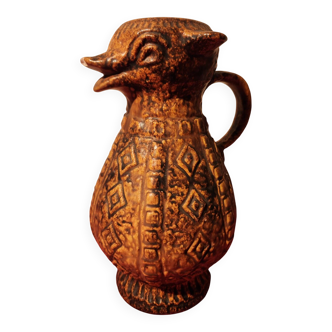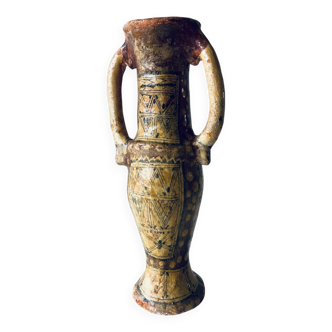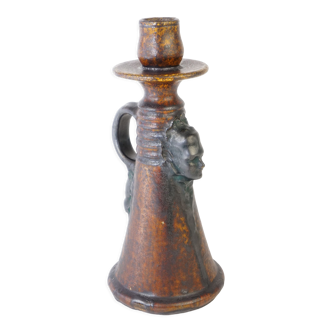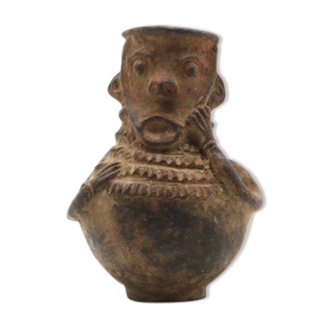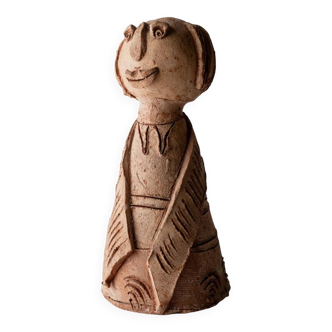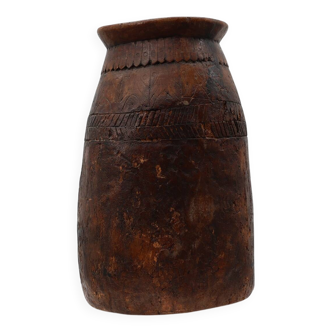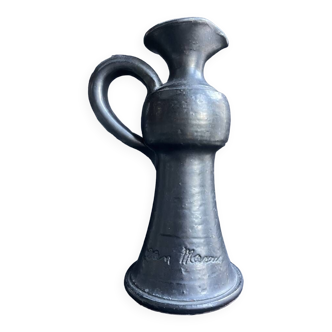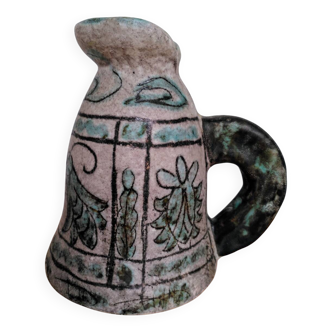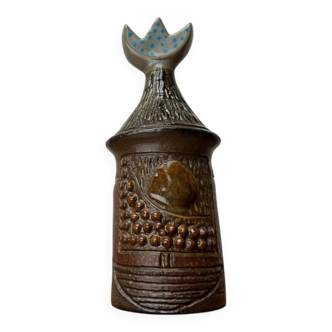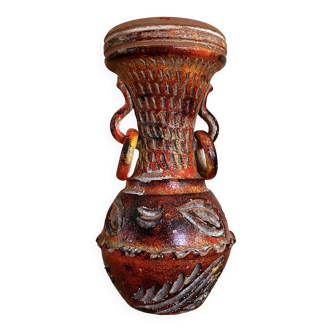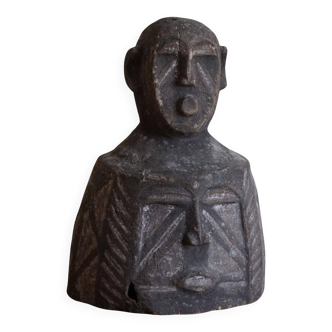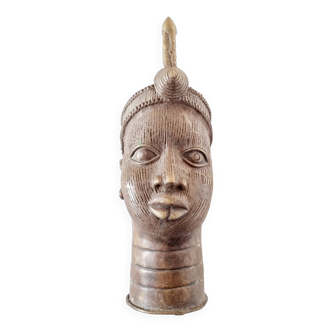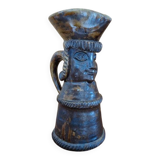
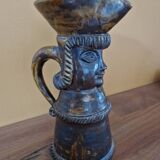
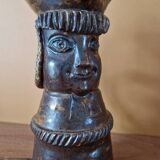
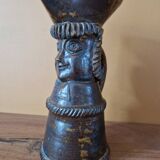
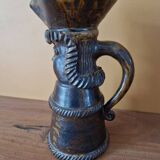
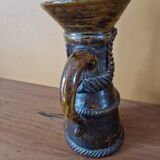

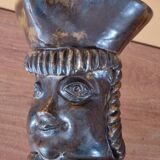
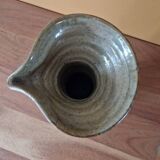
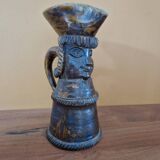


André Rozay (1913-1991) at La Borne - Anthropomorphic pitcher - In stoneware

- Dimensions :
- H25 x W10 x D10
- Color :
- brown
- Material :
- ceramics, porcelain and earthenware
- Style :
- design
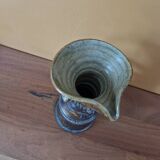
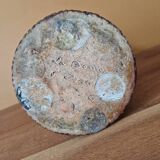
André Rozay (1913-1991) in La Borne. Anthropomorphic jug. In brown glazed stoneware. Pinched spout, ribbed decoration on the belly and the lower part resembling hair. Signed underneath. Height: 25cm. Perfect condition. *Born in 1913 near Vierzon, from a poor family, André Rozay began working at the age of 11 after obtaining his school certificate. His passion for drawing led him to join a ceramics factory where he drew and modelled figurines. At the same time, he improved his drawing skills by attending evening classes. At 14, influenced by his father, a railway worker who did not consider the profession of painter serious, he pursued ceramics education and obtained his vocational diploma, but his interest in drawing encouraged him to study at the School of Fine Arts in Bourges. Benefiting from free train access (through his father, an employee of the railways), André visited museums, exhibitions, and zoos in Paris. There, he met the young sculptor François Pompon, whose work he admired. He particularly loved the animal drawings of Paul Jouve. This was likely what motivated him to become a drawing teacher, but he dropped out after his first year at the School of Fine Arts in Paris, finding the selection process too harsh. He then returned to work in the factory. To escape compulsory labour service (STO) in Germany, André clandestinely fled to La Borne and reconnected with Jean Lerat, whom he had met in Bourges at the School of Fine Arts. For over a year, André worked with Jean in the workshop of Armand Bedu for the dealer-collector François Guillaume. At the end of 1943, André joined the workshop of Alphonse Talbot and learned turning. In 1958, he bought this workshop and remained there until the end of his life. Author: Christine Lavenu. Source: Art-angelux.