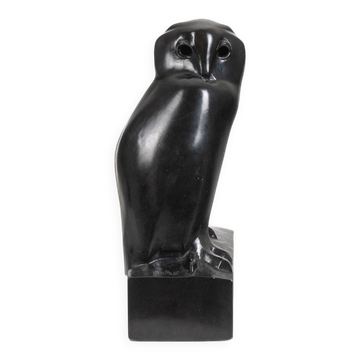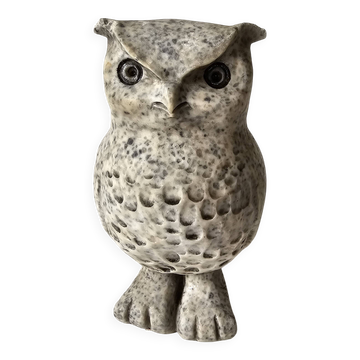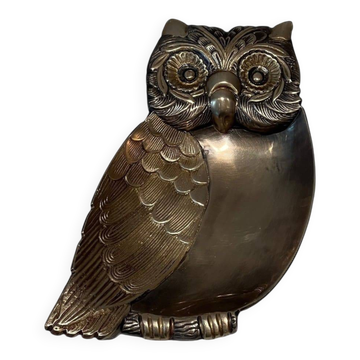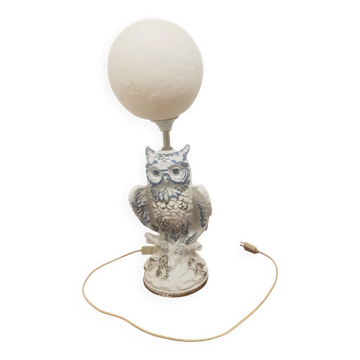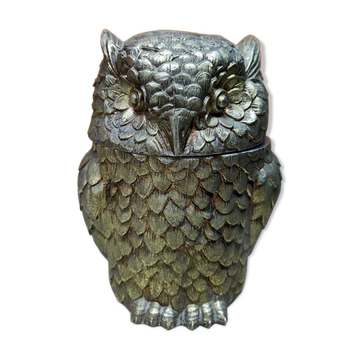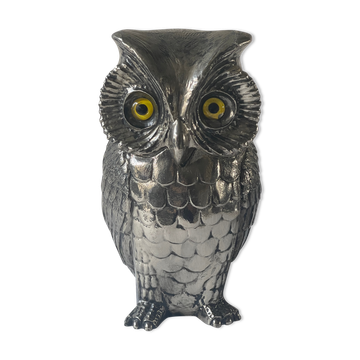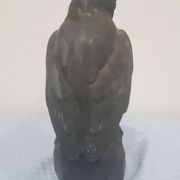
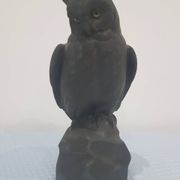
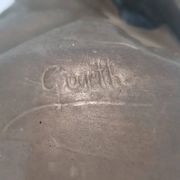
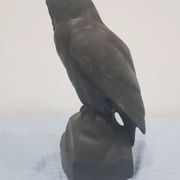
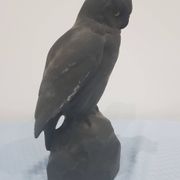
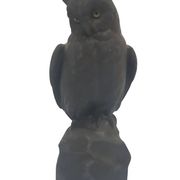
Owl sculpture, black lawinit, art. Curth, Henker & Co., Germany, 1920s.
- Dimensions :
- H38 x W17 x D17
- Color :
- black
- Material :
- stone and plaster
- Style :
- art deco
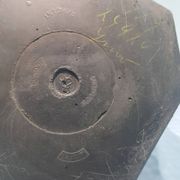
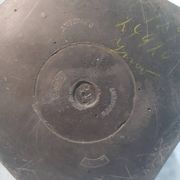
Owl sculpture made of lawinit, an expressive work of German Art Deco created in Berlin in the 1920s. The project, signed by the artist Curth, was produced by the Henker & Co. Manufacture, known for its innovative approach to form and material. The monumental height of 38 cm and width of 17 cm emphasise the decorative character of the sculpture, whose body rests on a stylised, polygonal base. The material – lawinit, patented by Henker & Co. – gives the object a uniform matte surface of deep, cold black, with a slightly grainy texture imitating natural stone. The only colour accent is provided by the owl's eyes, subtly highlighted in yellow with dark pupils, adding an element of life and focus. The shape is simplified, geometric, with soft contours in line with the Art Deco spirit. The sculpture was cast in one piece, with no visible joints. It is preserved in very good condition, with a slight patina and minimal, natural signs of time, typical of authentic vintage objects. This owl tells the story of a time when Berlin was one of the most important centres of avant-garde and experimentation. Its silhouette expresses the strength and gravity that characterised Art Deco projects of the era – the monumentality of form and the desire to simplify nature into a geometric sign. The deep black of the matte surface harmonises with the mysterious and almost watchful gaze of the bird, as if the sculpture were meant to oversee the tranquillity and focus of the home. The lawinit, an innovative material for the 1920s, gives the whole piece an impression of durability, while referencing the fascination with artificial stone and the formal experiments that characterised interwar modernism. The sculpture can find its place in a classic library, a home office, or on a console in the living room – anywhere that expressive presence and noble simplicity are important. It can be paired with period veneered furniture or minimalist metal and glass accessories to highlight the contrast of textures. In a collector's interior, it will harmonise well with other Art Deco objects, while in a modern space, it will become a focal point, especially against a light wall or among a palette of subdued colours.
Sculpture: other similar vintage pieces
Discover more similar items- -13%
- -16%
- -22%
- -6%
- -27%
- -21%
- Sold out