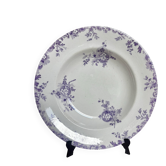
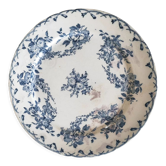
Antique Longwy Hanoï Serving Platter • Lavender Transferware, c.1890–1900 (

- Dimensions :
- H2 x W34 x D34
- Color :
- white
- Material :
- ceramics, porcelain and earthenware
- Style :
- classic
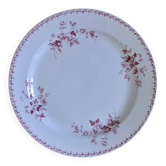
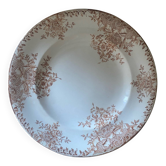
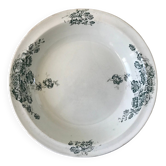
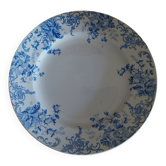
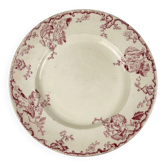
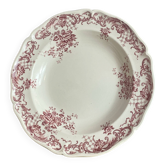
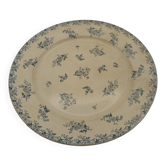
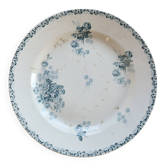
There are pieces of old French tableware that quietly sit in the cupboard. And then there are pieces that make you wonder what dinner looked like when they were new. This beautiful large serving platter was made by the celebrated Faïenceries de Longwy in France and carries the wonderfully evocative Hanoï pattern. Dating from around the end of the 19th century, it is decorated in an exceptionally pretty soft lavender-purple transfer on a warm ivory ground — trailing foliage around the rim with delicate floral and oriental-inspired medallions scattered across the centre. The underside retains the original purple factory backstamp, with its crowned shield clearly reading: HANOÏ LONGWY And at approximately 34 cm (13.4 inches) diameter, this is no little side plate. It's a proper French serving platter. Why “Hanoï” The name is particularly evocative because when this pattern appeared around the turn of the 20th century, Hanoi was part of French Indochina. French decorative arts of the late 19th century were fascinated by Japanese, Chinese and wider Asian design, and manufacturers regularly gave patterns suitably exotic names. Longwy was particularly well placed within that fashion: the factory became famous for richly decorated ceramics and designs influenced by Asian decorative arts. Here, however, the effect is surprisingly restrained. Instead of the jewel-like colours normally associated with Longwy enamels, Hanoï uses essentially one beautiful lavender tone, allowing the intricate transfer decoration to do all the work. It's a remarkably contemporary-looking combination for something made more than a century ago. His is an authentic antique piece approximately 125 years old, and it quite rightly shows evidence of that life. There is general age-related surface wear and utensil marking, some discolouration and staining, small manufacturing irregularities and fine crazing to the glaze, particularly visible on the reverse.