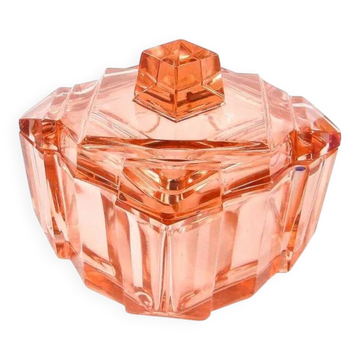
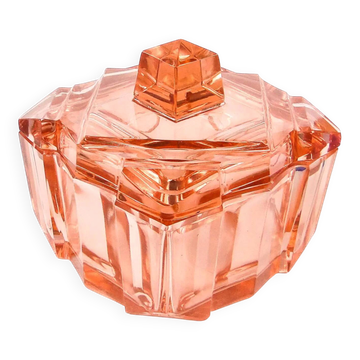
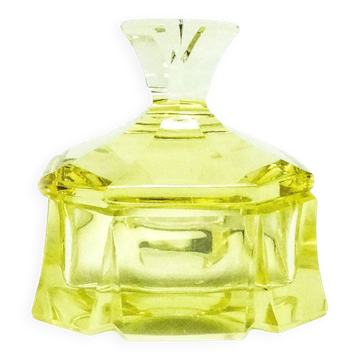
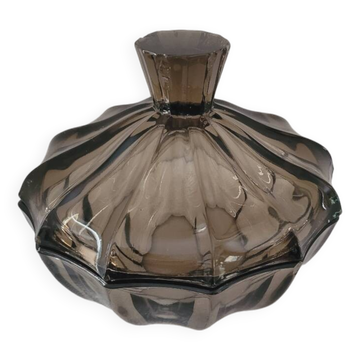
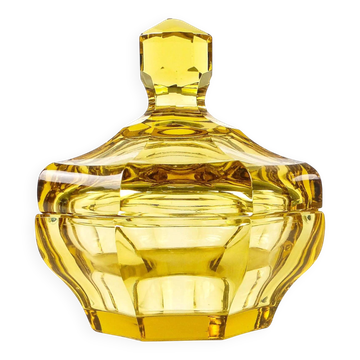
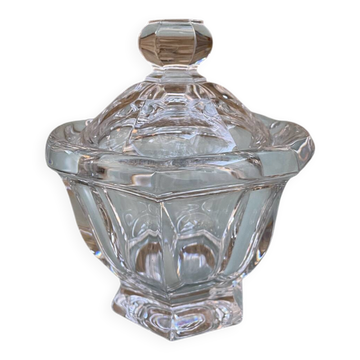
Art Deco bonbonniere, crystal, Moser, Czechoslovakia, 1930s

The Moser bonbonniere from the 1930s is an example of Czech Art Deco craftsmanship, made of faceted crystal glass in a warm, light yellow shade with a subtle cool tone. The glass surface is polished to a high gloss, enhancing its clarity and brilliant shine. The bonbonniere's form is based on a geometric, symmetrical composition: a wide, low bowl and a massive, multi-faceted handle on the lid create a distinct, architectural silhouette. Both the body and the lid are decorated with vertical and diagonal cuts, allowing light to refract at numerous points. The material – crystal clear, thick glass – remains smooth and pleasant to the touch. There are small scratches and a few minor chips on the surface, but the overall condition is very good, with no major damage or signs of repair. This bonbonniere captures the rhythm of the 1930s, when Moser – one of Europe's most important glass manufacturers – embraced the Art Deco language, full of geometry and luminous contrasts. Each facet reflects light like crystal prisms, evoking the atmosphere of salons where glass became not only a vessel but also a stage for the play of light. The handle on the lid resembles a miniature column – a confident, monumental accent that speaks of the architectural inspirations of the era. This glass does not speak of everyday life, but of celebration – of moments celebrated among the sound of glass and conversation. The bonbonniere can be displayed on a low sideboard or console in the living room, where its geometric form and yellow colour will play with natural light. It works well among walnut wood furniture, mirrored trays or chrome accents that highlight its Art Deco pedigree. In a collector's interior, it is worth combining it with other glass objects – vases or goblets – to create a coherent, luminous composition. It can also serve as a solo accent against darker walls, attracting attention with its architectural form and the play of light on its facets.
Sweet boxes & sugar bowls: other similar vintage pieces
Discover more similar items- -17%
- -18%
- -14%
- -15%