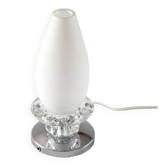
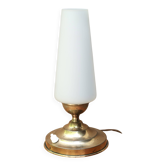
Art Deco bedside lamp, Poland, 1960s

- Dimensions :
- H25 x W13 x D13
- Color :
- white
- Material :
- glass and crystal
- Style :
- art deco
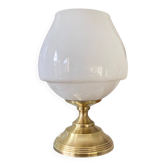
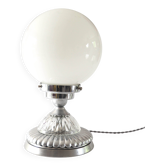
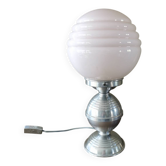
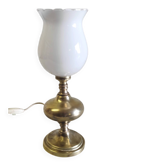
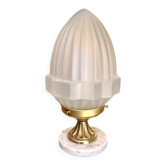
A bedside lamp in the Art Deco style made in Poland in the 1960s. Its construction is based on the combination of a matte, white glass shade with an elongated, oval shape and vertical grooves, and a metal base in a silver shade with a slight sheen. The oval shade, reminiscent of an egg, diffuses light to create a soft effect, while the vertical ribbing gives it a delicate texture and depth. The metal base, which shows clear signs of patina, has scratches and local dents. The built-in black plastic rotary switch matches the minimalist character of late Art Deco, as does the visible red wiring. The harmonious combination of simple forms and gentle curves is characteristic. Condition: the lamp shows clear signs of age – discoloration, scratches, and small dents on the base, while the shade remains free of cracks or major damage, and the whole has retained its unprocessed, vintage character. The lamp evokes the atmosphere of 1960s Poland, a period when geometric simplicity met the lightness of glass and the subtlety of metal details. Its silhouette – simple yet full of soft light – seems to whisper the story of evenings spent with a book or conversation at a bedside table. The metal with a slight patina speaks of the passage of time, and the matte glass absorbs light in a way that evokes calm, intimate moments of the era, when even a small object could become an important part of daily ritual. This fixture can be placed next to a bed, on a low bedside table or console, where the oval shade will soften the light and add gentleness to evening moments. It works particularly well in arrangements referencing Polish modernism and late Art Deco, as well as in vintage collector interiors with a minimalist colour palette. It can be combined with low, simple lacquered wooden furniture or glass, as well as complemented with accents of chrome metal or period ceramics to emphasise its historical dialogue with the space.
Bedside and table lamps: other similar vintage pieces
Discover more similar items