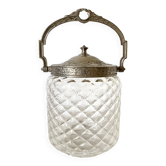
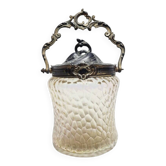
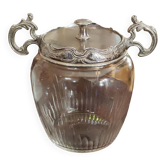
Tea caddy, Rococo, pressed glass, pewter, France, early 20th century

- Dimensions :
- H24 x W10 x D12
- Color :
- transparent
- Material :
- linen
- Style :
- art nouveau
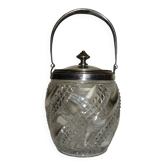
A Rococo-style tea caddy made in France at the beginning of the 20th century, constructed from pressed glass with a clear, cool hue and pewter finishing elements. Its structure is based on a tall, cylindrical form – the glass surface is adorned with an elaborate pattern: diamond cuts on the lid and rim, horizontal bands with star motifs and grooves, as well as smooth transitions between plain and textured sections. The handles, lid mount, and rim are made of pewter – the silvery, distinctly patinated colour contrasts with the shiny glass. The asymmetrical handle with leaf motifs and openwork scrolls represents the lively Rococo trend, characteristic of French decorative arts from the revival era. The proportions of the container are balanced thanks to the massive walls combined with the intricately shaped closing element. No visible damage, only slight patina on the metal, so the condition can be described as very good – original, without restoration intervention. The vessel's form evokes the atmosphere of French tea tables from a century ago, where the transparency of the glass revealed the aroma of the leaves, and the pewter handle invited daily ritual. The Rococo ornamentation – exuberant, full of swirls, yet ordered in the symmetry of the lid – tells of an era when everyday objects were meant to be both practical and decorative. In the details of the surface, the play of light on the cuts, and the velvety patina of the pewter scrolls, echoes of tea conversations and meetings that set the rhythm of old salons are hidden. The tea caddy can be displayed on a classic console or in a glass cabinet – among other period vessels and silverware, its ornamental pedigree will stand out. It will also work well as a soloist on a breakfast table in the style of a French bistro, among porcelain cups, intricately decorated plates, or with a crystal decanter. In an eclectic interior, it is worth combining it with simple ceramics or elements of natural wood to emphasise the subtle play of textures and light offered by glass and metal from the early 20th century.
Sweet boxes & sugar bowls: other similar vintage pieces
Discover more similar items- -15%
- -15%
- -15%
- -15%
- -16%
- -15%