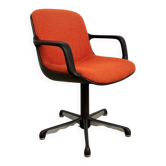
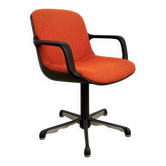
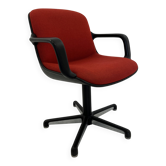
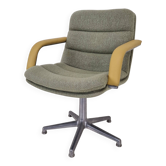
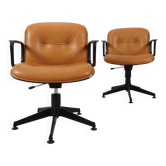
Vintage Mid-Century German Modern Office Chairs by Pollock for Comforto

- Dimensions :
- H81 x W66 x D60
- Color :
- green
- Material :
- fabric
- Style :
- design
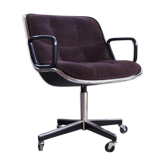
This pair of office armchairs was designed by Charles Pollock for the German manufacturer Comforto during the 1970s. The seats are made of durable brown plastic and high-quality olive-coloured fabric. A swivel leg or high armrests are the attributes of the furniture, which is intended to ensure comfort during long use. They were created with office workers in mind. Charles Randolph Pollock was born in 1930 and died in 2013. He was an American industrial designer who created elegant furniture, most notably an office chair connected by a single aluminium rim that became known as the Pollock chair. Introduced in 1963 and still in production, this iconic chair became a staple in U.S. Offices in the 1960s and can be seen on the Mad Men television series, as well as at institutions such as the Smithsonian Institution and the Metropolitan Museum of Art. After serving in the US Army for two years as Art Editor for INFANTRY Magazine, Pollock worked with George Nelson at Herman Miller. In 1958 he left Nelson's office and joined Florence Knoll. The designs created there were an achievement in terms of structure and aesthetics, and the chairs remain a Knoll classic to this day. Comforto is a German furniture manufacturer that has been producing office furniture since 1863. Pollock also designed a similar model for Knoll International. Both chairs have become icons of design. These armchairs are in original vintage condition. The pieces have scrapes and patina. The seat is 45 cm high. The colours of the products shown in the photos may differ slightly from the actual ones. This is due to individual monitor settings and lighting conditions – the photos were taken in artificial light, which may affect the perception of colours. However, we strive to ensure that the photos reflect the actual appearance of the product as faithfully as possible. The offer may include photos of the item in a living space, but these are for illustrative purposes only.
4.9 ()
Desk chairs: other similar vintage pieces
Discover more similar items- -33%
- -20%
- -19%
- Sold out
- -20%