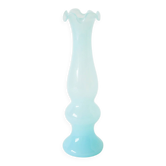
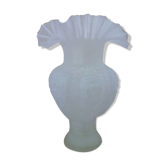
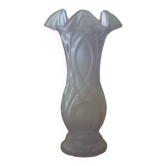
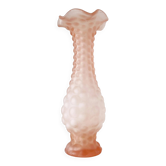
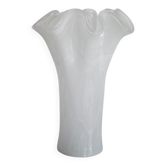
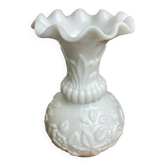
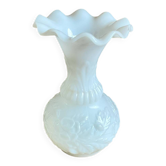
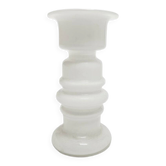
Vase with frill, mid-century modern, glass, designed by L. Fiedorowicz, Poland, 1970s

- Dimensions :
- H32 x W14 x D14
- Color :
- white
- Material :
- glass and crystal
- Style :
- mid-century
A vase designed by Ludwik Fiedorowicz for Huta Staszic (HSG Tarnowiec) is an example of Polish artistic glass from the 1970s. The characteristic form is based on a solid, rounded base, from which a slender neck decorated with symmetrical rings rises and is topped with a wide, frilled edge with an irregular line. The material is dense, opalescent glass in a milky white, warm shade – with subtle transitions to transparency visible at the edges, more pronounced at the flared upper part and at the foot. The uniform, mirror-like surface is free of additional decorations or fittings, and the expression of the form is based on the interplay of shape and light. The whole is preserved in good condition – the glass is free of chips and cracks, shiny, with minimal signs of use typical for its age, without any restoration interventions. This vase echoes the 1970s, when Polish design experienced artistic freedom and fascination with the purity of form. In its construction, it combines the weight of massive glass with visual lightness, as if it captures the brightness of the day. The frilled collar evokes organic inspirations and tells the story of experimentation with material – even empty, the vase becomes a point of dialogue between the user and the space. The shiny surface reflects the shades of the surroundings, and the softly diffused white fills the interior with subtle light, bringing a touch of optimism from the era. In arrangements, it can be combined with simple mid-century furniture or placed on a veneered chest of drawers, exposing the depth of colour and softness of the form. It works as a soloist against a light wall, as well as in the company of minimalist accessories – a single branch, a graphic in a black frame or matte ceramics. In vintage or eclectic collector's interiors, it will serve as a sculptural accent that emphasises the character of the space.