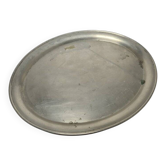
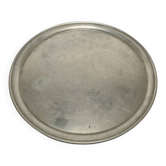
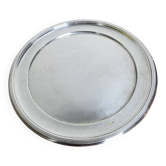
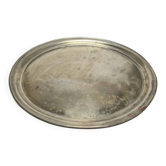
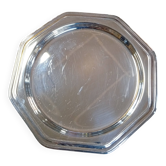
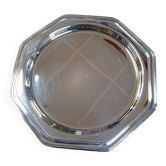
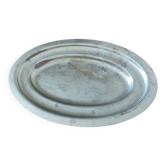
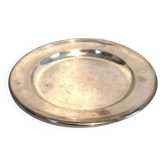
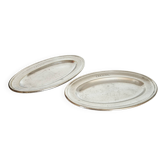
AAV Restaurant Tray, Minimalism, Silver Plated Alpaca, Poland, 1920s

- Dimensions :
- H18 x W25 x D2
- Color :
- silver (Color)
- Material :
- metal
- Style :
- vintage
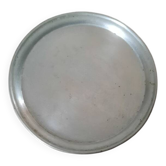
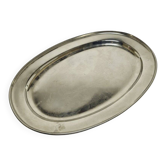
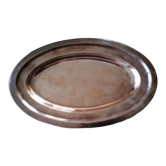
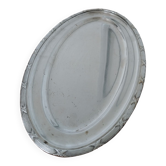
The oval restaurant tray from the 1920s was made in Poland from silver-plated alpaca, following the principles of minimalist design from the early interwar period. Its construction features smoothly profiled, gently raised edges, a flat surface without handles and adornments, and a subtle, matte silver sheen. The colour scheme is limited to a cool, muted silver with local satin reflections, most visible on the edges and central part of the tray. The surface bears numerous small scratches, minor dents, and uneven wear of the silver plating, especially on the edges and the working surface. The simple, functional form—devoid of decorations, engravings, or fittings—emphasises the utilitarian character of the object, typical of the pragmatic approach to design during the interwar period. The tray has retained its original patina and has not undergone contemporary restoration; the visible signs of use are an integral part of its history. Condition: good, with authentic traces of time typical for the age of the object. Here, one can hear the distinctive voice of an era that valued substance and clarity of form. Its cool surface and uncluttered profile evoke images of dining halls from the 1920s, where simplicity was synonymous with durability and dignity of everyday rituals. Each wear mark or scratch records traces of past meetings and conversations—like the tray itself telling the story of porcelain being slid across a table and the repetitive gesture of serving. The simplicity of the form becomes a testament to discipline and pragmatism, while the authenticity of the patina—a ledger of history. The tray can be displayed solo on a console or sideboard, where its minimalist character will become a subtle accent in the arrangement. In a living room, it will find its place both among interwar period furniture and in modern collector interiors—it can be matched with ceramics of geometric shapes, glass carafes, or candles in metal holders. The cool sheen of the metal will contrast well with warm wood or a matte, dark surface, highlighting the contrast of materials and the significance of a historical detail.