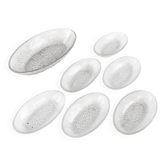
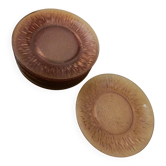
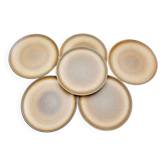
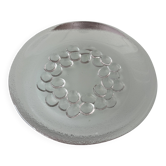
Set of dessert plates Krople Rosy, glass, designed by J. Drost, Ząbkowice, Poland, 1970s

- Dimensions :
- H2 x W18 x D18
- Color :
- transparent
- Material :
- concrete
- Style :
- mid-century
A set of six dessert plates from the 'Krople Rosy' (Asteroid) series, designed by Jan Drost for HSG Ząbkowice in Poland in the 1970s, is an example of precise, modernist glass design from the era of socialist modernism. Made of transparent glass with a cool, clear tone, the plates feature a simple, shallow, and harmoniously rounded form. The glass surface is frosted matte, subtly contrasting with the delicate gloss at the edges. The centre of each plate is decorated with a relief of clustered, raised droplets arranged in concentric, geometric patterns – a motif inspired by the natural texture of dew, and characteristic of innovative experiments in Polish design of the 1970s. Outside the decorative area, the glass is smooth and pleasant to the touch, with well-thought-out proportions, creating a cohesive, minimalist composition. The set is in very good vintage condition – no chips or damage, with minor signs of use and a natural, slight difference in glass transparency due to age. These plates tell the story of Polish design in the late modernist era, when designers from Ząbkowice sought new forms of expression through experiments with light and texture. Their surface catches the light discreetly, using the relief droplets as a miniature light installation that changes depending on the viewing angle. In this simplicity and subdued detail, one can feel the spirit of optimism typical of the 1970s, when design was meant not only to serve function but also to subtly decorate everyday life. Each plate – like a fragment of morning dew captured in glass – takes you for a moment into a world of quiet, modern elegance. In arrangements, this set can be combined with porcelain with smooth, white surfaces or with glass tinted in pastel tones to highlight the delicacy of the ornamentation. It works well in a dining room kept in the spirit of mid-century modern or in eclectic vintage collections, where pairing with a table with a natural wood or concrete top will bring out the subtly matte finish of the glass. Their light form is also worth using during less formal gatherings – as a decoration for fresh fruit or desserts, where the shine of the droplets and their relief serve as an intriguing background for the presented dishes.
Dessert plates: other similar vintage pieces
Discover more similar items- -15%
- -15%
- -10%
- -28%
- -25%
- -20%
- -18%
- -15%
- -15%
- -55%
- -10%