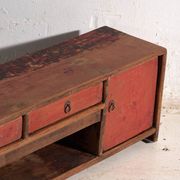
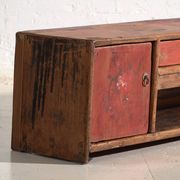
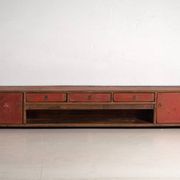
Antique low lacquered red elm furniture – China, around 1900
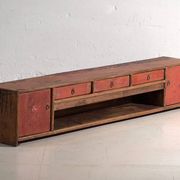
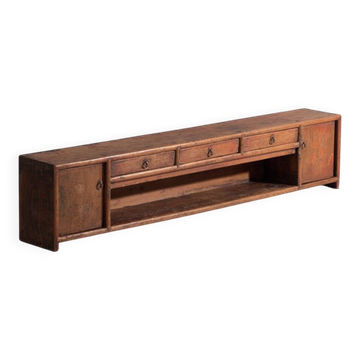
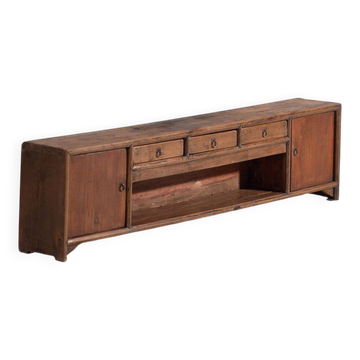
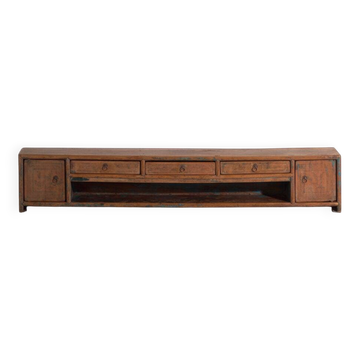
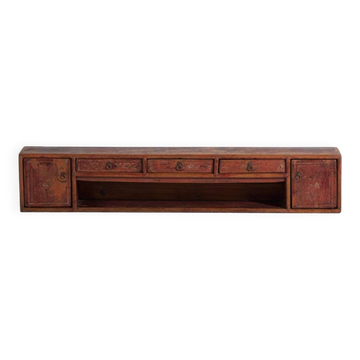
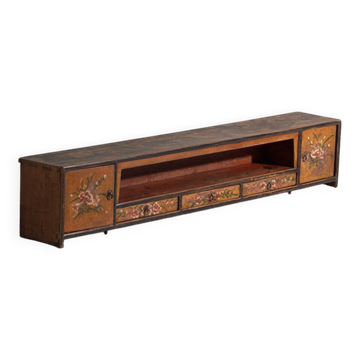
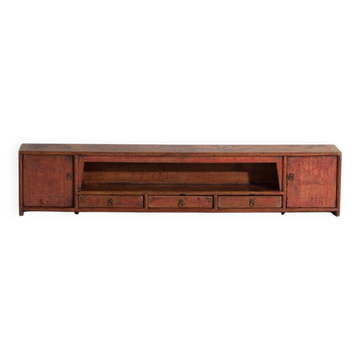
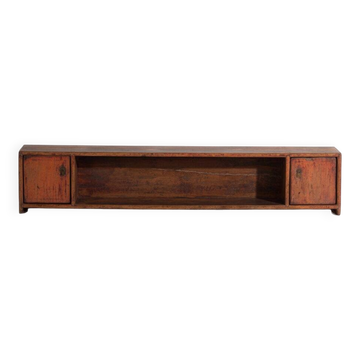
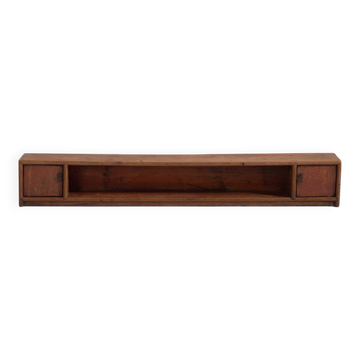
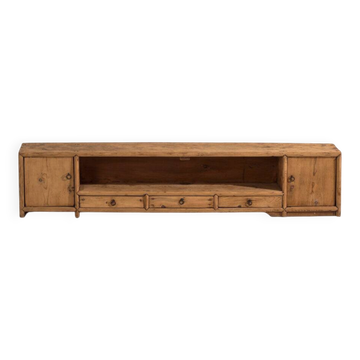
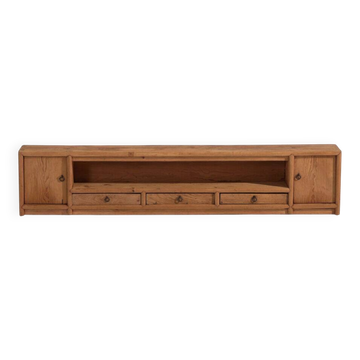
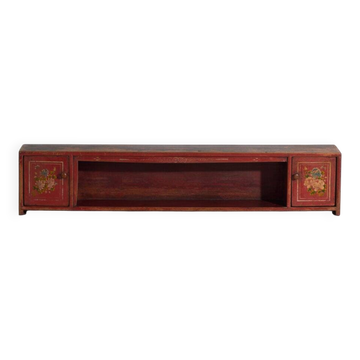
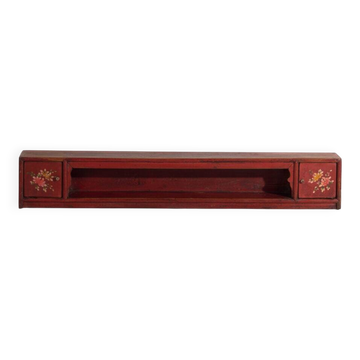
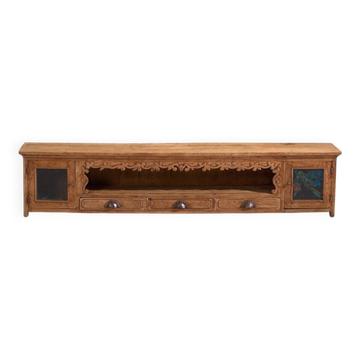
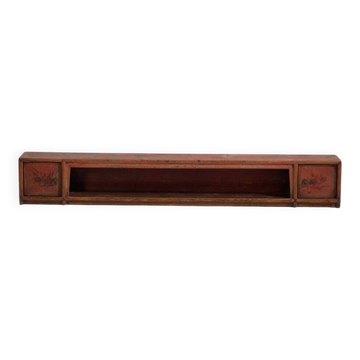
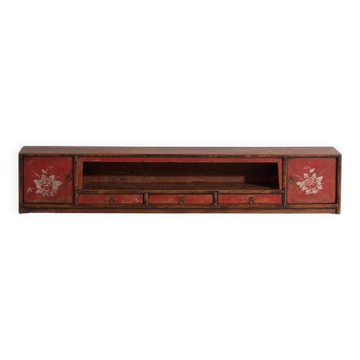
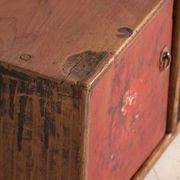
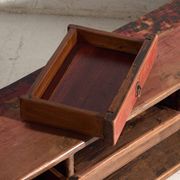
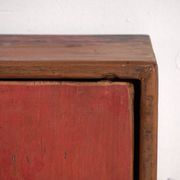
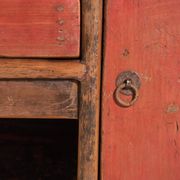
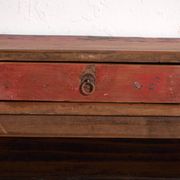
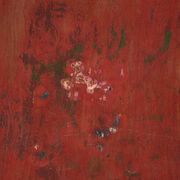
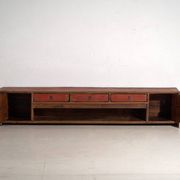
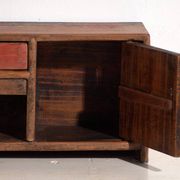
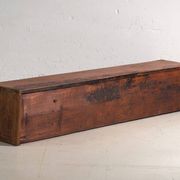
This antique low red lacquered elm furniture is a Chinese kang piece with three drawers, two side doors, and a central niche with a shelf. It originates from northern China, from the Qing dynasty, where elm was covered with red oil lacquer, the most common in domestic furniture. Red was not an aesthetic choice but the norm. The vermilion-tinted oil lacquer protected the wood from moisture and soot from the kang, and its colour, associated with fortune and celebration, made it suitable for a utilitarian piece. The case is made of solid elm, assembled with mortise and tenon joints, with rounded upper corners. Three drawers occupy the centre, two panel doors close the side modules, and the central niche retains its shelf. The handles are iron rings on rosettes. Beneath the red, remnants of a painted floral decoration emerge: a small pink and green bouquet on the left door, barely legible, and scattered blue and white spots. This was a previous layer or a sporadic addition, now almost absorbed by the lacquer. The vermilion surprisingly retains its quality on the drawers and doors, with the dull sheen characteristic of aged oil lacquer. The top, on the other hand, has lost almost all its colour and shows the dark-stained elm. The contrast between the two surfaces constitutes the main reading. The red makes it an accent piece: one is enough to warm a room with a neutral palette. Details. Dimensions: Length 159 cm – Depth 25 cm – Height 31 cm. Style: Chinese Qing Dynasty. Materials and techniques: Elm wood; wrought iron fittings; mortise and tenon assembly; red oil lacquer and remnants of painted decoration. Place of origin: China. Period: Qing Dynasty. Date of manufacture: Circa 1900. Condition / Observations: Good. Well-preserved original red lacquer on drawers and doors; top worn down to the wood. Wear consistent with age and use.
5 ()